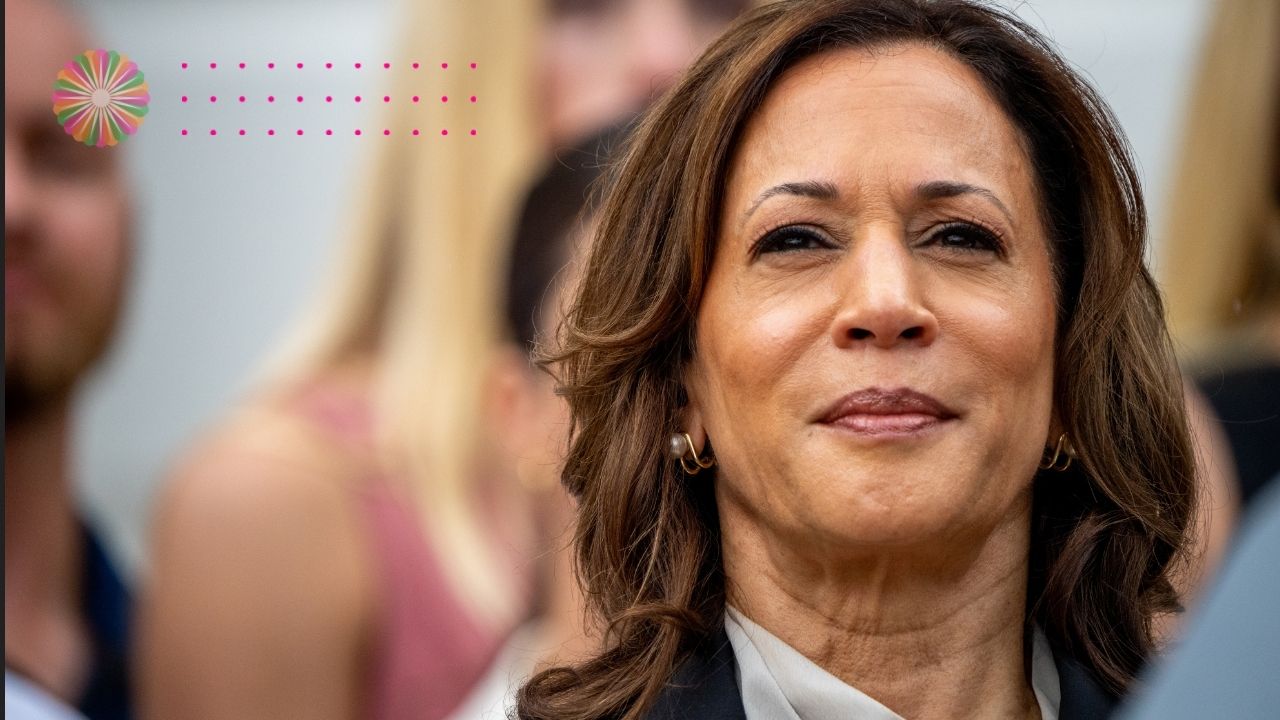

On July 24, 2024, President Joseph Biden withdrew from the US presidential race and endorsed his Vice President Kamala Harris to succeed him as the Democratic nominee.
Just a week later, at the Black Journalists’ Convention in Chicago in July, former President Donald Trump mis-pronounced her name and said:
“She was always of Indian heritage and promoting Indian heritage. I didn’t know she was black until a number of years ago when she happened to turn Black.”
“Turn”?
In this election cycle, Trump started it.
But four years ago, soon after Biden selected Harris as his running mate, my husband Professor Thomas Kailath and I had agreed to be interviewed by Indian TV host and former ambassador TP Sreenivasan who knew that I had requested the then San Francisco District Attorney, a certain Kamala Harris, to deliver the inaugural Sarah Kailath Lecture (in memory of Tom’s late wife) at UC Berkeley. The running theme of the series is ‘Women and Leadership’.
Paraphrased below are my responses to questions on Kamala’s Black identity, Indian heritage and geopolitical positions regarding the subcontinent:
Now, as her visibility has soared and the stakes have climbed, the conversation about Kamala’s heritage of race, ethnicity, class, gender has also amped up, pervasive and loud. Regardless of Trump, this (I think) was bound to happen!
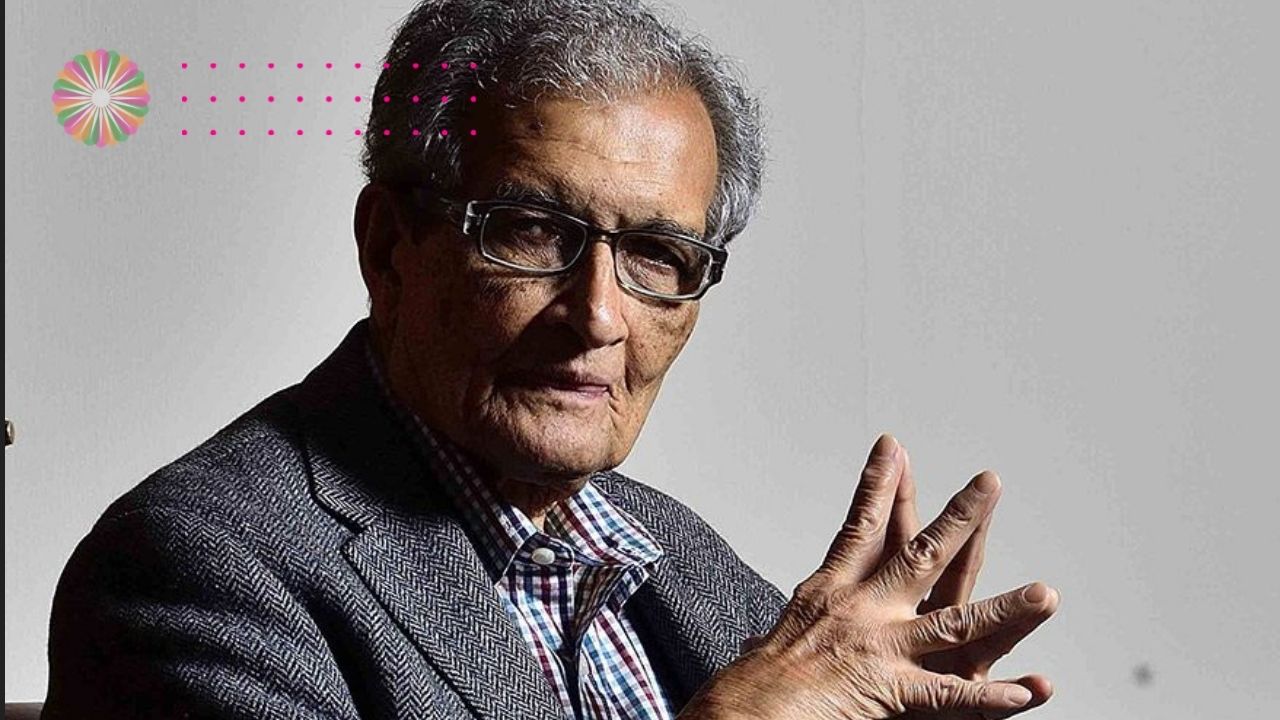
At the 2006 Sidhartha Maitra Memorial Lecture at UC Santa Cruz (a series named for my late husband), in a talk titled ‘The Tyranny of Identity’, my teacher and guru, Nobel laureate Amartya Sen, had explained why a multiple-identity attribute is not a disorder, but something quite the opposite. Our active recognition of it within ourselves (something that most people naturally have in our increasingly globalized modern world) greatly improves the chance that two (or more) randomly selected individuals will find common ground.
The confluence of multiple minority classifications such as the one Kamala fits into has recently generated a trove of scholarly work on ‘intersectionality’, a term coined in a 1989 paper by Professor Kimberle Crenshaw, who saw it as “a prism to bring to light dynamics within discrimination law that weren’t being appreciated by the courts.” The term has since been adopted, adapted, co-opted by scholars, progressive activists, and right-wing conservatives to serve their own agendas– “make clinical observations, analyze power imbalances, and suggest tools to eliminate them”. Understandable, since the everyday usage of its constituent words is dense with possible meanings. I am using the word here in its Wiki definition: “a theoretical framework that describes how multiple forms of oppression and discrimination can overlap and compound, creating unique challenges for people with multiple identities.”
Kamala had responded to Trump’s dismissive, disrespectful, condescending tone and phrasing with her own version of Michelle Obama’s “When they go low, we go high.” It is the muting, no-nonsense “Next question, please” that she used in late August during her first major interview as her party’s presidential candidate, with CNN’s Dana Bash. NQP is a form of the former prosecutor’s “Irrelevant!”
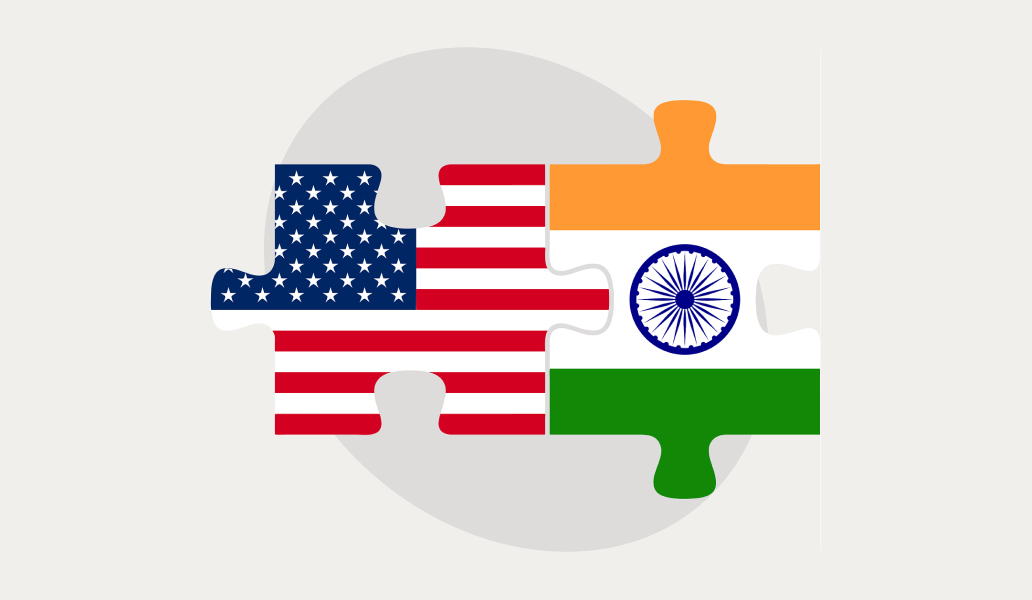
And what exactly is the irrelevancy that she is trying to move us away from? It is the discussion about race, ethnicity, gender, sexuality as related to her candidacy that even just her name generates. Yes, her name is Indian, but so what? Yes, her parents were immigrants– father born in Jamaica, mother in India but, so what? Yes, she is a woman, but so what? Yes, she is married to a Jewish man, but so what? With her confident stride and trademark pantsuits, pearls and pussy-bows, Kamala seems to have negotiated her multiple identities/intersectionality by focusing on the idea that bias and stereotyping of anyone is bad, that all discrimination and inequality of opportunity should be fought. Her Opportunity Economy and focus on the middle-class spans all social categories of Americans– Black/White/Brown, Female/Male, Straight/LGBTQ.
“Injustice anywhere is a threat to justice everywhere.”
We have two applicants for the highest office in the land; we should evaluate them just as we would for any job-opening we are empowered to make decisions about. Both have articulated their positions, promises and policy-prescriptions, and it is interesting that so many supporters of Trump choose to believe in him while not quite believing him while, ironically, the opposite may be true for Kamala. But they both also have a past, much of it public knowledge. Importantly, Kamala asks that we focus not on their respective heritages per se but on the individuals, including what they did with their lives and their inheritances, that is, scrutinize their qualifications, accomplishments, records, preparation, grasp of issues, or lack thereof.
Thus, Kamala has finessed bubblegum conversation about whether she is Black or Indian. Her Irrelevancing-approach, an Irrelevance-code if you will, is Elevated and Elegant– this is the Elevance of Kamala!
We need to rise to meet her. There is the real risk of ‘intersectionality bias’. It would be a pity if members of the South Asian ‘model-minority’ choose to view things exclusively through their own lens, in isolation from those of other intersecting groups, particularly a minority that has had a dramatically different, centuries-old history in America of slavery, ghettoization and systemic bias. When Kamala speaks of equity for Blacks, she is not threatening to tax rich Indian men to support Black welfare moms but rather she is speaking of fairness in housing, lending and jobbing decisions. We should not hope to be understood if we do not understand.
“Be the change you wish to see in the world.”
On Tuesday November 5, on the national stage, VOTUS (Voters of the United States) will decide on our next POTUS. Will we together declaim:
What’s in a name? That which we call a lotus
By any other name would smell as fresh.
MLK, Gandhi and Shakespeare meet– and we get Kamala!
Are You Passionate About India's Future? Join Our Community to Collaborate, Advocate, and Create Positive Change.