
There is censorship, where the state dictates what people can read, watch, or see. And there is self-censorship, which is imposed on writers and artists by the gatekeepers of publishing, who decide what can be shown, seen and read.
Censorship is terrible, but it is at least direct: you know you can’t do something because the state says so and it has the power to punish you if you step over the line. Self-censorship is pernicious and insidious, because the state has not told you what you cannot do ― you have to guess what you can say or do, and you take the risk if you are brave, and you face the consequences. It could be a libel case or other lawsuit, a sedition trial, threatening trolling, or, often enough, mob violence against the writer, people close to the writer, even the bookseller.
I lived in Singapore as a reporter in 1991-1999. Singapore did ban books and films, but it did not have the threat of mob violence. However, there was self-censorship. This is because Singapore used the golfing metaphor of OB Markers ― areas that became out-of-bounds, but which were never defined clearly, so that people knew what cannot be said; except, that it was unspecified so you had to guess. Sometimes, when the tidings were good, you could say more; at other times, it would be too dangerous to say something. And the decision had to be yours. And that meant people said less than they felt like saying.
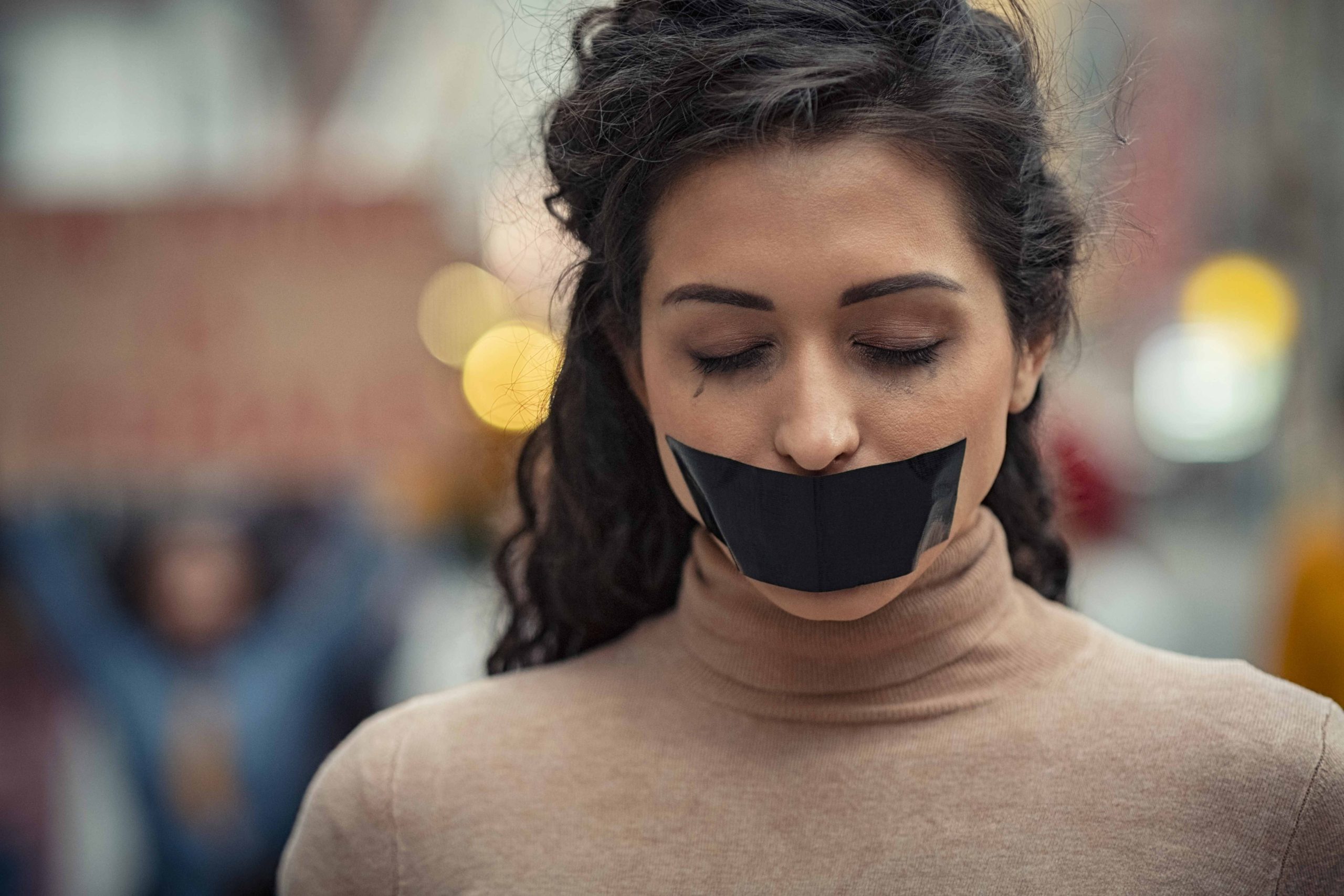
Self-censorship is a particular kind of cowardice that dresses itself in the language of prudence. It does not burn books; it is when a bookshop refuses to stock the book. It does not issue a fatwa; it is worried about how a map is drawn. It does not ban an author; it invokes local legal, regulatory, commercial, and market considerations to prevent the distribution of the book. Self-censorship does not leave fingerprints. Here, the censor and the censored are, grotesquely, the same person.
The latest depressing exhibit in this dispiriting rogues’ gallery is Penguin Random House India’s decision not to distribute Joe Sacco’s The Once and Future Riot, a graphic journalism book on the communal violence in Muzaffarnagar in 2013. Published by Jonathan Cape/Penguin UK in 2025, the book was expected to reach Indian readers later this year, during the monsoon. Instead, a spokesperson explained that the decision to withdraw was taken “after taking into account local legal, regulatory, commercial, and market considerations.” The PRH India CEO elaborated, citing an inaccurate map of India and unspecified “content questions” for which citations were not supplied.
Self-censorship does not leave fingerprints. Here, the censor and the censored are, grotesquely, the same person
Sacco himself was unconvinced. “I think they’re finding excuses,” he told Sidharth Bhatia of The Wire, “because ultimately this is about communal violence in India. It’s about how politicians use violence as a means of advancing themselves electorally.” His book, he noted, had already undergone “quite an extensive fact-checking process” with his American publisher, and he had accepted a handful of minor corrections. The map objection has a whiff of procedural formality about it. It is the kind of technical infraction that becomes suddenly visible when the will to publish has quietly departed.
Penguin India’s decision would be shocking if it were not so familiar. Penguin India has been here before, in circumstances that predicted its current behaviour. In 2014, the publisher agreed, in an out-of-court settlement, to recall, pulp and destroy all copies of American Indologist Wendy Doniger’s 2009 bestseller, The Hindus: An Alternative History, bowing to pressure from the Hindutva group Shiksha Bachao Andolan. Internationally, Penguin had shown exemplary courage in defending Salman Rushdie’s The Satanic Verses, arguing that what was at stake was the future of free speech itself; but in India, it chose not to publish the title because its consulting editors considered it too incendiary.
The Indian government would prevent its import under customs law soon after, but months before the Ayatollah declared his fatwa against Salman Rushdie in February 1989. Penguin India presumed that if it went ahead with the publication, and if there were consequences, there was no guarantee the State would protect the company’s right to publish. When Doniger’s book was destroyed, she herself was measured in her response. She did not blame the publisher, pointing instead to the Indian law that makes it a criminal rather than civil offence to publish a book that offends readers. She called the law the true villain. She was being generous. The law creates pressure; yielding to it is a choice, although, to be sure, the record of the State as a guarantor of free expression is so poor that discretion becomes the better part of valor.
The word is swallowed before it has been spoken.
This is the mechanism that those who defend India’s record on free expression rarely wish to discuss. India proudly calls itself the world’s largest democracy, but a more accurate description is that it is the most populous country to hold elections regularly. It calls itself a constitutional republic that enshrines freedom of speech, although its doctrine has many caveats.
What it does not advertise is the architecture of deterrence that surrounds that right. In India, the process is the punishment. A publisher facing a civil suit, two criminal complaints, and potential liability under laws against outraging religious sentiment does not need to lose in court in order to be defeated. The litigation alone ― the time it takes for cases to be heard, legal costs, reputational exposure, the sheer exhaustion of fighting on multiple fronts simultaneously ― is sufficient incentive to settle, to pulp, to quietly decide not to distribute. Dinanath Batra’s Shiksha Bachao Andolan never won a judgment against Penguin. It didn’t need to. The threat of the courtroom was enough. The same logic applies to Sacco’s book: no injunction was sought, no legal action filed. A five-page list of queries, a pointed reference to a map, and the publisher simply stepped aside. The government said nothing; Penguin folded.
What links these cases ― Sacco, Doniger, Rushdie ― is not merely that publishers or governments flinched. It is the texture of the flinching: the instinct to reach for the bureaucratic, the procedural, the technical, rather than admit that the real calculation is political. Penguin India does not say it fears reprisals from Hindu nationalist groups or political embarrassment in a country where it also publishes books by its Prime Minister. It talks about the accuracy of maps. It talks about citations. The language of administration performs the function of a blindfold: the dull bureaucracy of autocracy.
This habit of voluntary silence is not confined to India. In France, the publisher Fayard stopped printing Ilan Pappé’s The Ethnic Cleansing of Palestine even as demand for the book surged following October 2023 and the subsequent war on Gaza. The decision was taken without a court order or a government ban. It was simply made. In the United States, Harvard University’s publishing arm cancelled an entire peer-reviewed special issue of the Harvard Educational Review on Education and Palestine. Most articles had been submitted by August 2024, several accepted for publication by early 2025, and authors had signed publishing agreements before the press abruptly withdrew. The executive director claimed the manuscripts were not ready for publication, in part citing a copy editor’s resignation, a rationale that contributors found implausible and insulting. One Palestinian-American anthropologist called it “a betrayal of academic mission”; another condemned it as “a grave violation of academic freedom”.
Across the Pacific, in Australia, the State Library of Victoria abruptly cancelled the contracts of three writers who ran workshops for it, all of whom had publicly opposed Israel’s war on Gaza. One of the writers concluded that the library had cancelled the program as an act of self-censorship, to preempt the backlash they expected for giving a platform to pro-Palestine writers. The Adelaide Festival disinvited a Palestinian-Australian author with strong views on the Middle East without the government asking it to do so, leading to an implosion and cancellation of the festival this year. No one ordered the festival, the library, or the publisher to act. They acted in anticipation of a complaint, the purest expression of self-censorship: the preemptive surrender.
Publishers exist to take exactly this risk. When they decline to do so, they fail the readers who deserve to judge for themselves.
India, meanwhile, has an answer for all of this. Reporters Sans Frontières’ World Press Freedom Index, which ranked India 157th out of 180 countries in 2026 ― a six-place drop from the previous year, with RSF noting a rise in violence against journalists, highly concentrated media ownership, and outlets with increasingly overt political alignment ― is routinely dismissed by Indian officialdom as biased, Western-funded, and ideologically motivated. One can quibble with the precise ranking. Is India necessarily worse than its neighbors? Nepal is 87th, Sri Lanka 134th, Pakistan 153rd, Bangladesh 152nd. Is the media in those countries truly superior to India’s? That can be debated, but what is not necessary to debate is the fact that protection of freedom of expression in India has declined steeply and it is not at the vanguard of the index.
The government’s rebuttal is always the same: the indices are blind to India’s scale, its diversity, its complex democratic resilience. What the indices actually measure ― the freedom of a journalist to report, of a scholar to publish, of a publisher to distribute a book about communal violence ― is precisely what the Sacco affair illuminates. A country need not imprison journalists to have a press freedom problem. It needs to only ensure that publishers learn, reliably and repeatedly, that certain books are more trouble than they are worth.
What distinguishes self-censorship from ordinary caution is its anticipatory quality. The book is not published because someone imagines the consequences of publishing it. The workshop is cancelled because someone fears the reaction of people who have not yet reacted. The foreign academic is not invited because of the assumption that she would not get the visa to enter the country. The map objection is raised because someone needs a reason that is not the real reason. The word is swallowed before it has been spoken.
Joe Sacco spent weeks in Muzaffarnagar talking to Jat farmers and Muslim survivors, to politicians and journalists, trying to understand how a local altercation between young men spiralled into the mass displacement of thousands of people. “I actually think it is a very fair book,” he said. “I think I’m looking from different angles.” Fairness, evidently, is no protection. What makes a book dangerous in a climate of self-censorship is not bias but approach: the willingness to describe what happened.
Publishers exist to take exactly this risk. When they decline to do so, they do not fail the authors whose books they suppress. They fail the readers who deserve to judge for themselves ― and they quietly instruct every other writer watching that some subjects are, in the territories that matter, best left alone. And so more words are swallowed, and many simply don’t get written.
Are You Passionate About India's Future? Join Our Community to Collaborate, Advocate, and Create Positive Change.