
During his meeting with Prime Minister Narendra Modi in New Delhi, US Secretary of State Marco Rubio extended an invitation on behalf of President Donald Trump for Modi to visit the White House. US Ambassador to India Sergio Gor publicly highlighted the gesture on social media, describing the discussions as productive and focused on deepening cooperation. Indian officials and readouts from the Modi government made no reference to the invitation. Rubio, for his part, told reporters that India remained a cornerstone of US strategy in the Indo-Pacific and insisted that bilateral relations were strong. This exchange captured the central dynamic of the visit. The Modi government sought to manage a strained relationship without conceding ground, while the US side projected continuity and dismissed any notion of underlying problems.
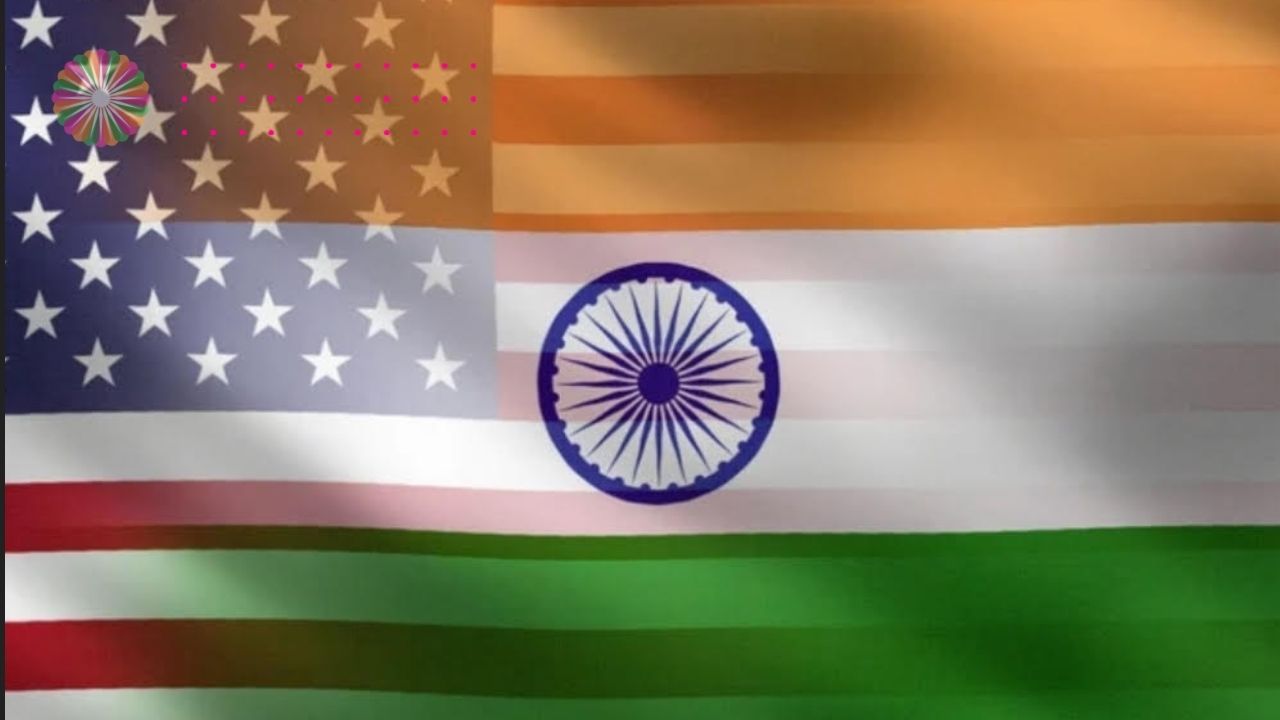
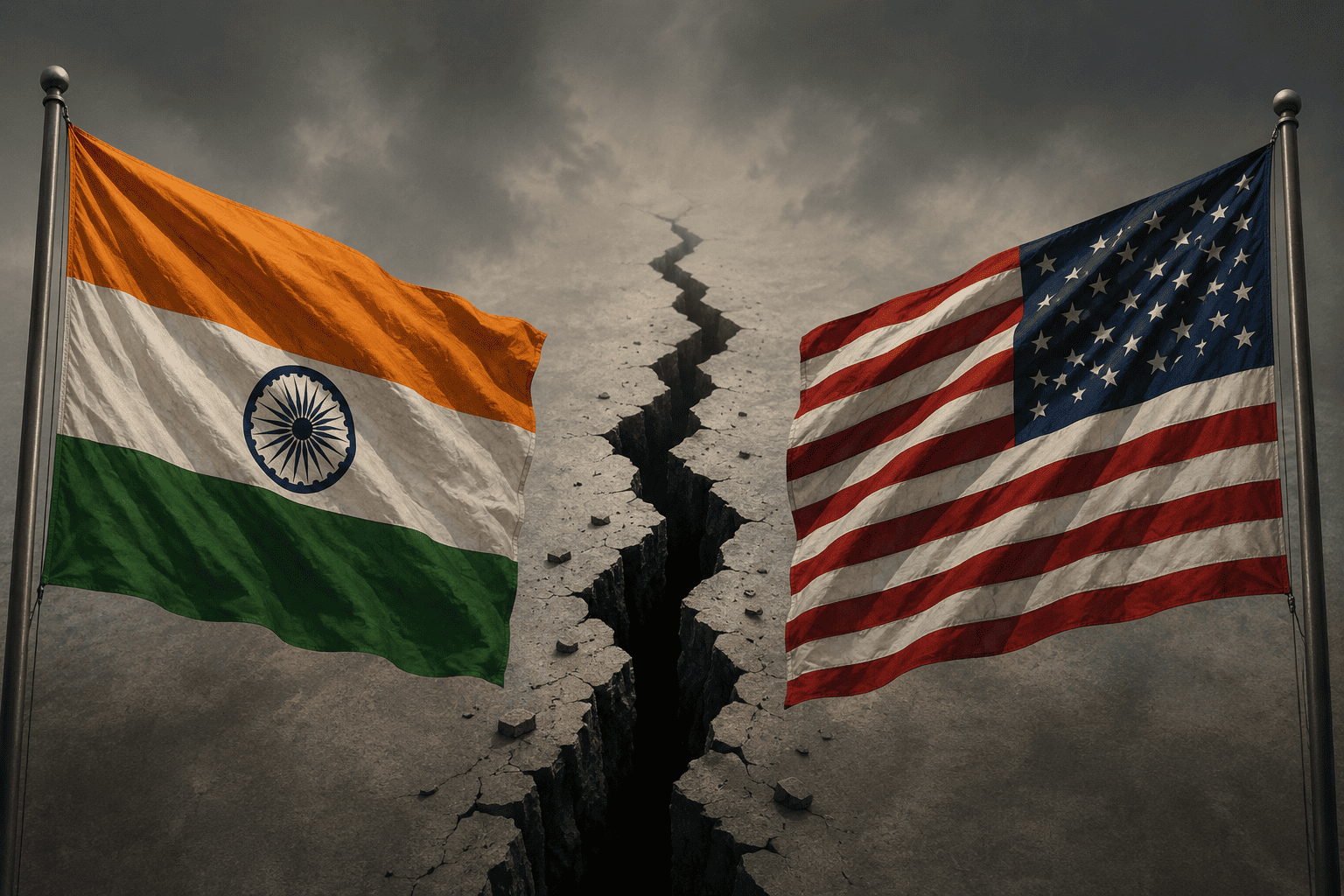
The episode exposed the widening structural chasm between India and the United States under the second Trump administration. While official communiqués emphasized shared democratic values and a resilient partnership, the strategic reality tells a different story. The bilateral segment of the visit yielded little of substance ― only a solitary agreement on critical minerals cooperation. This agreement does not represent a fresh breakthrough, since it merely replicates existing frameworks within the Quadrilateral Security Dialogue and the 15-nation Pax Silica framework.
The US was once India’s most trusted strategic partner. That trust has eroded while Washington pretends otherwise.
The two sides were at odds on the very diagnosis of the health of the relationship. The Indian side treated the tour as an effort to stabilize bilateral ties after a year of deep strain. In contrast, Rubio publicly dismissed any suggestion that the relationship required restoration, insisting instead that the partnership remained rock-solid. His refusal to acknowledge the visible fractures in the relationship demonstrates a significant flaw in New Delhi’s strategic calculations. The Trump administration no longer recognizes New Delhi’s concerns. The US was once India’s most trusted strategic partner. That trust has eroded while Washington pretends otherwise. It is a frayed partnership marked by mismatched expectations and limited willingness to address core divergences.
The Modi government’s best hope now is that the relationship would not sink any further. For a quarter of a century, the India-US partnership rested on three stable pillars. The first was a shared strategic alignment in the Indo-Pacific ― even if it was not explicitly stated, it was directed at countering China. The second was an economic understanding centered on trade and technology, in which India consistently maintained a trade surplus. The third was robust people-to-people ties driven by highly skilled IT workers, H-1B visas and Indian students in American universities.
Under the transactional approach of the Trump presidency, all three pillars have suffered severe damage. Neither Secretary Rubio nor Ambassador Sergei Gor have been able to offer any concrete assurances that this trend can be reversed. The strategic equation has shifted dramatically because of President Donald Trump’s preference for direct bilateral deals with Chinese leader Xi Jinping. The absence of a Quad leaders’ summit has effectively deprived India of its primary external balancer against Beijing, leaving New Delhi strategically exposed in its own neighbourhood.
On the economic front, the Trump administration has introduced policies that actively target India. Rubio used the visit to announce an ambitious target ― India is expected to purchase American goods worth $500 billion over the next five years. If implemented, this mandate will systematically erase India’s trade surplus and convert it into a massive trade deficit. This aggressive trade target is compounded by the regular imposition of tariffs and strict prohibitions on technology transfers, which directly challenges New Delhi’s domestic manufacturing and security ambitions.
Rubio’s performance in New Delhi confirms that American foreign policy towards India is no longer driven by a shared geostrategic vision for the Indo-Pacific region.
People-to-people contact has suffered under the restrictive MAGA approach to immigration. New rules by the Trump administration for H-1B visas and green cards have severely penalized Indian professionals and students, eroding the structural goodwill that once anchored the bilateral relationship. Rubio offered no relief on these fronts, instead doubling down on these new immigration policies.
The underlying reality is that India is trying to keep the relationship functional and hoping to wait out the remainder of the second Trump term with minimal structural damage. However, this strategy assumes a degree of stability that does not exist in contemporary international relations. Rubio’s performance in New Delhi confirms that American foreign policy towards India is no longer driven by a shared geostrategic vision for the Indo-Pacific region. It is governed almost entirely by domestic American political constraints, particularly immigration politics, protectionist trade policies, and technology hoarding.
New Delhi must now incorporate these permanent structural limitations into its long-term strategic planning. Symbolic diplomatic gestures of the kind Rubio and Gor make, such as getting President Trump on the phone during a celebratory public reception, will not translate into durable policy adjustments from Washington. The choice to host a Quad Foreign Ministers’ meeting during Rubio’s trip instead of announcing a formal Leaders Summit clearly indicates downgrading of the alliance. The grouping is now being managed as a bureaucratic forum rather than a high-level strategic coalition. This intersection of American domestic politics and India’s shifting risk assessment has had immediate consequences for India’s policy towards China. To avoid a two-front collusive threat from Pakistan and China without the American strategic umbrella, the Modi government has begun making substantial concessions to Beijing.
A post-Trump American administration will find it difficult to leverage India as a viable strategic counterweight to China in the future
It explains why the Modi government is conceding so much to Beijing. It has barred Bollywood films from covering the Galwan clash where 20 Indian soldiers died at the hands of the Chinese in June 2020. Filmmakers have been told that they cannot show or name China as an adversary. India’s Chief of Defence Staff has given Beijing a clean chit on its highly publicised real-time operational military support to Pakistan during its clash with India in May 2025. While the Modi government presents these recent engagements with Beijing as temporary tactical adjustments, they are establishing new diplomatic norms on the ground. This ongoing structural realignment may become so deeply entrenched that a post-Trump American administration will find it difficult to leverage India as a viable strategic counterweight to China in the future.
The Modi government attempted to signal its dissatisfaction with the American approach during the visit, though these feeble efforts were confined to the realm of diplomatic protocol. The most visible signal was the Indian decision to completely ignore Rubio’s public invitation for PM Modi to visit the White House. This invitation was conspicuously absent from all official Indian press releases and state media communications. Similarly, when Gor announced the $500 billion purchasing target and noted that India had become the top investor in the United States this year, the Indian side chose to be silent about them. Government-adjacent journalists were also permitted to pose unusually sharp, challenging questions to Rubio during his press interactions. These questions seemed like a deliberate attempt by the Indian establishment to make the visiting American official somewhat uncomfortable on Indian soil. By all accounts, the Modi government failed in these attempts, ostensibly due to a lack of political will.
The Modi government has failed to name the problem. It chose public cordiality over tough diplomacy, accepting a diminished role for India in Washington’s strategic calculus. Rubio pretended that India-US ties are rock solid to hide Trump’s transactional coercion. New Delhi smiled and tried to salvage the relationship. This approach protects short-term optics at the cost of long-term leverage. A mature government would have named the constraints and set limits on cooperation until the US restored reciprocity. By prioritising photo ops over policy substance, the Modi government allowed the US to define the relationship unilaterally.
Polite signalling by the Modi government will make no material difference to the shifting structural realities of Trump’s foreign policy, leaving India in a weaker strategic position vis-à-vis China
This defensive diplomacy from the Modi government cannot mask the fundamental shift in the India-US relationship. It is a relationship only held together by habit and inertia, where the strategic logic is frayed. The material conditions have shifted against India. Polite signalling by the Modi government will make no material difference to the shifting structural realities of Trump’s foreign policy, leaving India in a weaker strategic position vis-à-vis China and in a more vulnerable trade and technology posture at home.
The Rubio visit served as a clear indicator of these current constraints. It demonstrated the widening gap between declared ambitions and actual delivery in India-US relations. The Modi government should treat this as a prompt for serious internal review rather than another episode to be managed through careful domestic messaging. The stakes involve India’s long-term security and economic prospects in a highly volatile international system.
Are You Passionate About India's Future? Join Our Community to Collaborate, Advocate, and Create Positive Change.