
A father’s march
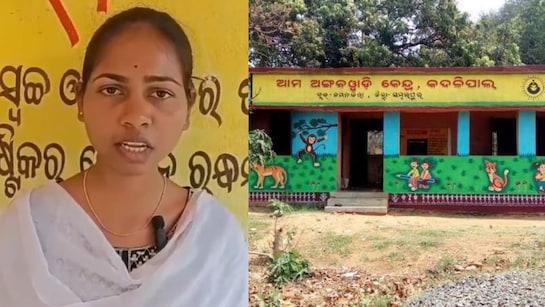
There is a particular kind of grief that has no ritual attached to it. When a child dies of illness, or age, or accident, a country has language for it: condolence, procession, memory. When a child dies because the system meant to prepare her for life instead crushed her underfoot, the grief has nowhere to go. It curdles. It looks for somewhere to stand. This week, in the middle of Delhi’s monsoon heat, a father found somewhere to stand. His daughter, a NEET (medical school entrance test, which was compromised) aspirant named Riya Thapa, took her own life, one more name added to a list that has grown so long that most Indians have stopped counting individually and started counting in aggregate, the way they count rainfall or inflation. What made this father’s grief different from that of thousands before him is not that it was sharper. It is that, this time, there was a march already underway, and he chose to walk into it rather than sit at home with it.
He did something almost unbearable in its simplicity. He asked a hunger-striking young man, Abhijeet Dipke, to stop starving himself and instead lead a march to Parliament. Not for vengeance, and not even, really, for justice in any narrow legal sense. He asked for it so that his daughter’s death would mean something more than another entry filed away in the Ministry of Education under student mental health, examination related.
This moment should not be exploited for tears. It should be understood for what it actually is: the clearest possible proof that India’s examination system has stopped being a gateway to opportunity and become something closer to a machine for producing casualties, and that the people paying the closest attention to this fact are not politicians, not columnists, not even the opposition. They are parents, standing at gravesides, doing arithmetic they should never have had to do.
This is what should worry the government far more than any meme. Memes fade. Parents do not forget how their children died.
Memes fade. Parents do not forget how their children died
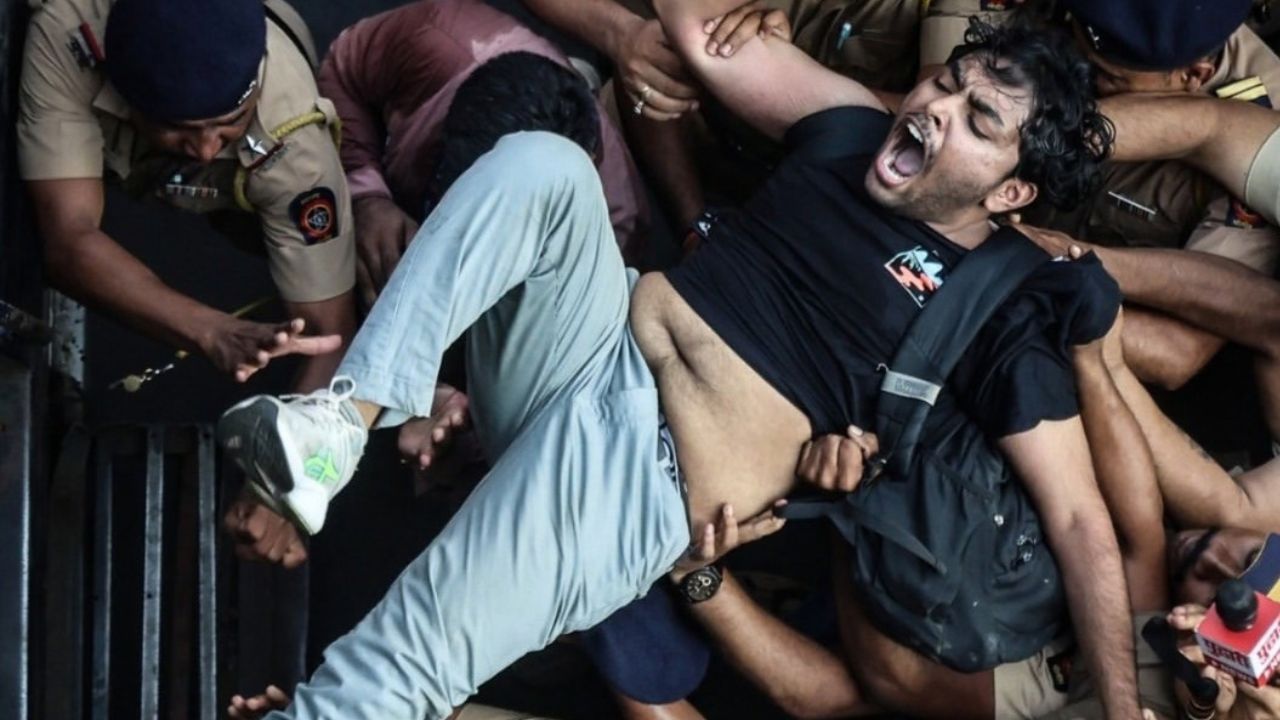
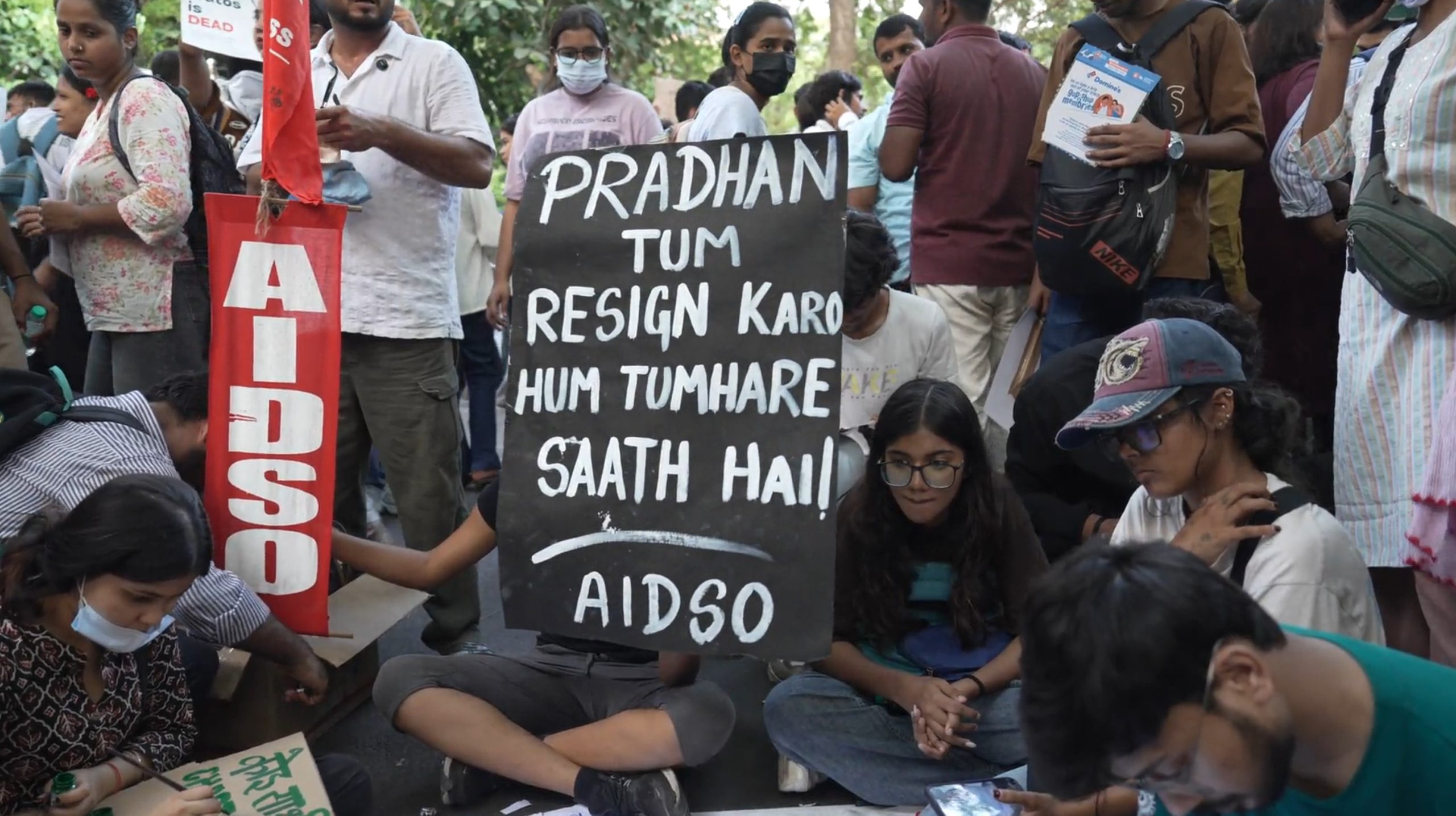
The Cockroach Janta Party began as satire, a retort to a sitting Chief Justice who, in a moment of extraordinary institutional carelessness, likened unemployed young Indians to vermin and parasites. By every rule of how these things usually go, it should have burned itself out within a news cycle: a clever hashtag, a few thousand shares, an embarrassing week for a judge who would issue a partial clarification and move on. That is not what happened. Two months later, it has more followers on some platforms than India’s oldest political parties. It has occupied Jantar Mantar. It has been tear-gassed and baton charged, with nearly 180 people injured in a single day of clashes. And now, almost by accident, it has become the vessel into which a grieving father has poured his daughter’s death, alongside thousands of other grievances: unemployment, examination fraud, the rising cost of simply being young in this country.
A movement that started as a joke about a judge’s poor choice of words is now carrying the weight of real graves. That is not a small thing. It is the moment a satire either grows up, or gets crushed by what it has been asked to hold.
The cockroach was never really a joke
What actually happened here? The “cockroach” insult was the spark, not the fuel. Chief Justice of India Surya Kant’s remark made an impression because it confirmed what millions of young Indians already suspected about how their country’s institutions regard them: as a problem to be managed, an inconvenience to be tolerated, rather than a generation to be served.
Three separate fires merged into this one blaze. First, the NEET and CBSE examination system, an apparatus so vast, so high-stakes, and so riddled with allegations of paper leaks, fraudulent degrees, and administrative failure that it has become a public health crisis in its own right, measured not in test scores but in suicide statistics. Second, a jobs crisis the government has spent a decade managing rhetorically rather than solving: degrees that lead nowhere, a formal sector that cannot absorb the number of young people entering it every year, and a political vocabulary built around ‘skilling’ and ‘startup culture’ that carefully avoids the plainer word, unemployment. Third, and perhaps most damaging of all, a judiciary that was supposed to be the last dignified institution standing above the noise of politics, delivering, from its highest bench, exactly the kind of contempt ordinary Indians have come to expect from everyone else.
The cockroach was never really a joke. It became a name large enough to hold a decade of accumulated resentment.
None of these three things is new. What is new is that they have, for the first time in years, found a single shared name to be filed under. That is what “cockroach” actually became: not an insult to be avenged, but a label wide enough to hold a decade of accumulated resentment. Every parent whose child failed an exam under suspicious circumstances, every graduate fruitlessly refreshing a job portal for the hundredth time, every young person who has watched a minister address them with the weary condescension of someone explaining away a nuisance, all of them found, almost overnight, that there was already a name for what they were feeling, and that other people felt it too.
This is the part the government has been slowest to understand, and its slowness shows in how it has responded: alternating between violence, the crackdown that injured nearly 180 people, and a tentative ten-minute outreach meeting with a senior minister that resolved nothing. That is not a strategy. It is a government that has not yet decided whether it is dealing with a mood or a movement, hoping that a little of both non-strategies at once will make the problem go away on its own.
It will not, because the underlying facts it is responding to have not gone away. Youth unemployment does not disappear because a hashtag stops trending. Examination corruption does not resolve itself because a march ends. And a father’s grief over his daughter does not have an expiry date that happens to coincide with a news cycle.
If this movement wants to be taken seriously as something more than an outlet for anger, it has to make this argument explicitly and constantly: that “cockroach” was never really about a judge’s poor word choice. It was about a government that has run for over a decade on the assumption that a young population’s frustrations could be managed through slogans, cricket, and Bollywood distraction rather than jobs, dignity, and functioning institutions. The moment the CJP movement stops being read as revenge for an insult and starts being read as a referendum on governance failure, is the moment it stops being containable by an apology from the bench.
Do not become IAC, become what IAC could not be
Here is the uncomfortable history lesson every organizer around Abhijeet Dipke needs to sit with, because India has actually run this experiment before, and the results are instructive rather than encouraging.
In 2011, Anna Hazare’s India Against Corruption movement did almost exactly what the CJP has just done. It took a specific, morally clarifying grievance, corruption, personified in the Lokpal Bill agitation, and turned it into the largest civil mobilisation urban India had seen in a generation. It had the same ingredients CJP has now: a charismatic figurehead willing to put his own body on the line through hunger strikes, an army of young, digitally literate volunteers, and a genuine cross-class coalition of the angry and the exhausted. For roughly a year, IAC looked less like a protest and more like the outline of a government in waiting. Then it made a choice, and the choice mattered more than anything the government did in response.
A father who lost his daughter chose to walk toward Parliament instead of walking away from the world
IAC eventually gave birth to the Aam Aadmi Party, but AAP built its machinery almost entirely around Delhi. It became, by design and then by habit, a Delhi party that occasionally made noise elsewhere. It won power in the National Capital Territory decisively and repeatedly, and it built a genuinely effective municipal and state governance brand there. But the national mobilization that had put hundreds of thousands on the street across the country in 2011 never converted into a national voter base. By the time AAP tried to expand into Punjab, Gujarat, and Goa, the organizational moment that had made IAC extraordinary had already passed. The energy that could have built forty state units instead built one very good one.
This is not a criticism of AAP’s competence. It is an observation about sequencing. Movements have a narrow window in which their energy is genuinely national and genuinely portable, before local grievances fragment it, before the news cycle moves on, before the government works out how to co-opt or exhaust it. IAC used that window to build one state’s political infrastructure exceptionally well. It did not use it to build the connective tissue — state units, membership rolls, local candidate pipelines, that a true national alternative requires.
If CJP wants to avoid repeating that mistake, the roadmap is not mysterious, because IAC already wrote it in reverse. The movement has, right now, something IAC took months to build: a north-star grievance wide enough to travel across region, caste, and class. Unemployment and institutional contempt for the young do not respect state boundaries the way corruption-in-Delhi optics eventually did. The task is to build the organizational skeleton while the energy of the protest last, not after it peters out. That means state level coordinating cells while Jantar Mantar is still occupied, not after it is vacated. It means recruiting beyond Delhi’s student and civil society networks into the mofussil towns and second tier cities where NEET and CBSE grievances are, if anything, more acute than in the capital, because the stakes of a single examination are higher when there is no family safety net behind it. It means resisting the pull towards becoming a permanent protest camp, which photographs well and burns out slowly, in favor of becoming a registered, disciplined political organization with a five year plan, even while it keeps its protest wing alive as a pressure valve.
Above all, it means resisting the temptation that eventually cost IAC its national character: letting success in one city become the whole project. Delhi will always be the loudest stage because it is where Parliament and the national press are. But if Dipke’s organizers spend the next year building only in Delhi, they will have built, at best, another AAP: a strong regional player capable of embarrassing the government in one legislature, not displacing it across 543 constituencies. The lesson of 2011-12 is not that movements fail. It is that movements succeed exactly as far as their organizational ambition reaches, and no further. CJP’s ambition, if it is serious about 2029, cannot afford to stop at the Delhi border.
The decisive factor for 2029
It would be dishonest to end this piece pretending that a youth movement, however large, can mechanically topple a government in a parliamentary democracy. It does not work that way, and pretending otherwise does CJP no favors. It would only set the movement up to be declared a failure the first time a general election does not happen on cue. Governments in India fall to arithmetic: coalition math, state level swings, anti-incumbency accumulated over years, and turnout. What movements like this actually do, when they succeed, is change what the arithmetic is counting.
The comparative record is instructive, because India is not the first place this has happened recently. Sri Lanka’s 2022 Aragalaya protests were driven overwhelmingly by young people responding to economic collapse and governmental incompetence. While the protests alone did not win an election, they made the incumbent president’s position untenable within weeks, in a way that years of conventional opposition politics had failed to achieve. Bangladesh’s 2024 student-led uprising toppled a government that had, by every conventional electoral metric, appeared to be unshakeable. Kenya’s Gen Z-led tax protests in 2024 forced a government to withdraw legislation it had treated as non-negotiable, purely through sustained, digitally coordinated pressure that traditional opposition parties had failed to generate. None of these movements began with a plan to contest and win a general election. All of them began, as CJP did, as an outraged response to one specific act of institutional contempt, and all of them grew because the underlying grievance turned out to be shared by far more people than the original spark suggested.
Nothing changes on its own. It only changes when enough people insist on being governed, and not merely managed
What connects all of them, and what should engage the attention of CJP’s organizers now, is this: nothing happens unless a government makes the mistake of believing that incompetence and corruption carry no cost as long as the theatrics of power are managed well. That is precisely the mistake the Modi government has been making, quietly, for a decade, and it is the argument CJP should make its platform, not an insult from the bench.
See how ministries have been distributed under this government over the past 10 years. Again and again, electoral utility outranks administrative competence in the calculus of who is rewarded with office. Ministers who deliver states in elections, who manage caste coalitions skillfully, who message loyalty and discipline flawlessly on television, are elevated and protected regardless of their administrative performance. Meanwhile, the actual outputs of governance — an examination system that cannot stop leaking, an employment machine that cannot absorb graduates, a bureaucracy that treats young citizens with the same disdain the Chief Justice showed them from the bench — are treated as background noise, manageable through messaging rather than through the unglamorous work of actually fixing anything. Governance failure, under this dispensation, does not disqualify from high office. It is, if anything, survivable, even rewardable, so long as the minister in question can be relied upon to win the next election and control the next news cycle.
This is the argument that should anchor CJP’s growth, and it is far more durable than any single insult, because it does not depend on Justice Surya Kant ever saying anything careless again. In plain speech, you have been governed for a decade by people selected for their capacity to win elections, not their capacity to run a country, and the wreckage inflicted by that choice is now counted in unemployment statistics and suicide watch figures. A government that rewards electoral craft over administrative competence will, by definition, keep producing exactly the crises — an education system in a shambles, joblessness, institutional contempt — that gave birth to this movement in the first place. Nothing about that dynamic changes on its own. It only changes when enough people insist on being governed, and not merely managed.
Whether that insistence is enough to reshape institutional arithmetic by 2029 is genuinely unknown, and any writer who claims otherwise is out to sell something. But the direction of travel is not in doubt. A father who lost his daughter chose, this week, to walk toward Parliament instead of walking away from the world. A movement that started as a joke about cockroaches is now carrying that choice on its shoulders. What it does with that weight, whether it builds the patient, unglamorous, nationwide organizational machinery that IAC never quite managed, or whether it remains a Delhi spectacle that fades the moment the cameras move on, will decide far more about this country’s next decade than any insult ever could.
Are You Passionate About India's Future? Join Our Community to Collaborate, Advocate, and Create Positive Change.