
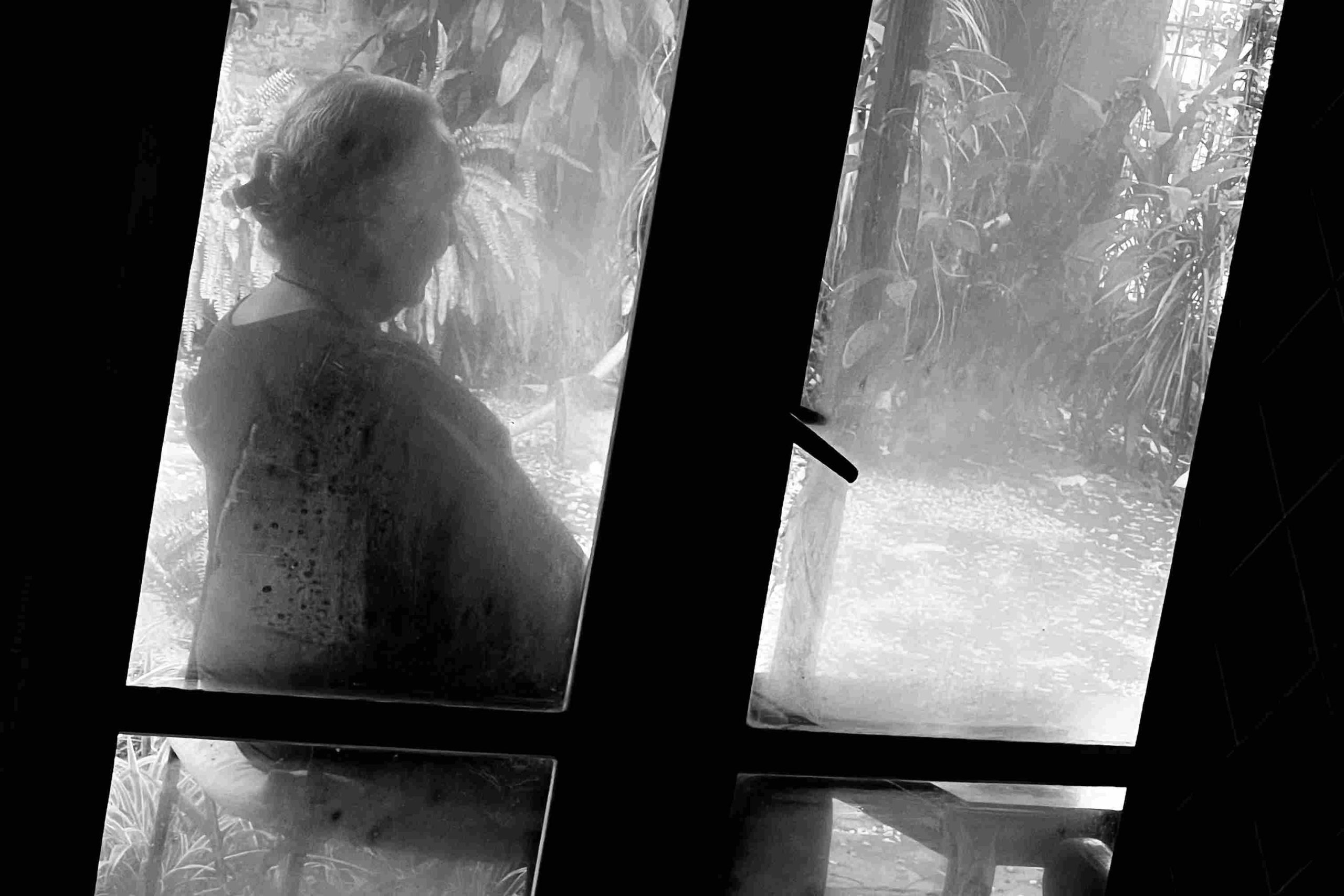

Image Credits: Naveen Kishore/Seagull Books
The first entry in my journal for the year 2020 begins with the statement that I am being so pushed into endless little bits of writing and speaking that I have little time for sustained work. This is despite my declining so many requests. It’s just nonstop moving from one bit of writing to the next ― statements, speeches, lectures, interviews. There is a plethora of scribbles on all sides. I do read and write something on each theme that I am asked to speak on, but this leaves me with less time to read what I want to. I have spoken and written about the world around me all my life, and continue to say what I think. But I can’t believe that what I say has any impact, or that I have anything new to say. I feel strongly that younger people should be the ones speaking out much more now. I should retire and live quietly in what I think of as my beautiful comfortable home.
But how can I think these thoughts given the events we face? Very soon there burst into our lives a fascist-type horror. An armed mob shouting Jai Shri Ram gathered at the gate of JNU. The mob was allowed into the campus where it went on a rampage and beat up people, attacked students in the hostels, destroyed whatever furniture they could lay hands on and generally played havoc. There were at least a hundred, armed with stout sticks, crowbars and stones. Such a large number could not have been allowed entry without clearance. It was clear as to who was conniving with whom to do what.
Democracy ceases to be such if freedom of expression is confined
I was dining with Janaki [Nair, the JNU historian] that evening but she rang just as I was about to reach JNU and told me not to come, as the mob was really vicious. The fear was that they would recognize me and attack me. They severely manhandled a couple of faculty members who tried to stop them. JNU was no longer in dialogue with individual people, it was now at the mercy of a mob ready to lynch whomever they wanted to. That this could happen on the campus of a well-established university left everyone astounded. What happened to the law and order that the new government claimed to have brought into our lives? We had to be aware of what we were up against and know that we would not be protected by any security organization linked to the government. I was reminded of the phrase about the barbarians at the gate.
We had assumed that the police would protect the university if it was attacked, but this incident made clear that the institution had no protection. The police stood by and watched. And ours was not the only university where fear entered the routine of living.
Intellectuals and academics under surveillance can be readily incarcerated. Democracy ceases to be such if freedom of expression is confined. It can also be curtailed through strict control of what students are taught. A curriculum of education that is ill-informed and prejudiced can result in effective illiteracy as it disallows the free pursuit of knowledge. Educational policies demand very careful examination before being adopted. Will each of us then have to think in strict isolation if the mind of each is to survive? Is this possible when permitted public statements will consist only of a restricted kind? Many societies in our neighbourhood and beyond are familiar with this experience.
Creative thinking and experiments with creating something afresh require an ambience where there is freedom of expression
If criticism of government is treated as anti-national and critics are arrested on charges of sedition ― the colonial law that we have not thought of discarding as yet ― then creative thinking in both the sciences and humanities will fade away. Creative thinking and experiments with creating something afresh require an ambience where there is freedom of expression. In the absence of such freedom, knowledge cannot advance. So if an Indian is to be sent to the moon, then he or she will have to ride piggy-back on the advanced technology of other societies. What most people don’t recognize is that scientific technology itself requires full freedom of every kind to think and experiment, apart from the requirements of research in the humanities.
***
I joined the formal dinner hosted by Mariam and N Ram [of The Hindu] in Delhi, after the annual Tranquebar Lecture given that year by the 2009 Nobel Laureate Venkatraman Ramakrishnan. The guests were thoughtful scientists and it was a pleasure talking with them. I was pleased that so many of them emphatically said that the Vice-Chancellor of JNU should have been removed for having allowed the mob to enter the campus, with the damage that followed. Mariam had seated me next to Venkatraman for part of the evening, so we talked about DNA and genetics and how important it was going to be in various disciplines, including history. I was impressed by the principled stand he took on the Indian Science Congress, that it should not be allowing discussion on all kinds of absurd theories about science in the ancient Indian past. He disapproved of its lack of discrimination in admitting papers in its proceedings that were utterly irrelevant and of no value. He had decided therefore not to attend. This is likely to increase in the coming years if most Indian scientists continue to accommodate what politicians say, however anti- scientific the latter may be. Scientists are not just super-technicians who always stay beyond the fray. They should also object when human values are being dismantled.
***
On returning to Delhi, I briefly visited my neighborhood and Jamia Millia Islamia, since that was where the action was. The students and faculty of Jamia had covered the walls with striking and perceptive posters that captured the current mood and its apprehensions. I then went on to Shaheen Bagh to get a sense of this dignified and civilized protest. How can suspected immigrants be called termites? What has happened to our ethical sensitivities? Why do we eulogize hatred so much and endorse its expression? And is all this hatred justified as a defence of Hinduism. Those who came into India at the time of Partition from Pakistan did not have documentary proof of their identity. Refugees of any kind anywhere would not be focused on this when their attention would be on physically getting away. I sat quietly in Shaheen Bagh, occasionally chatting with the women nearby and observing the protesters. Every now and then, someone would read out the preamble to the Constitution or the gathering would stand and sing the national anthem. I was experiencing a new form of passive resistance as dissent. I felt drawn back to the anti-British protests of the 1940s. I looked with a tearful gaze at all the women and was thankful that they existed.
Excerpted with permission from Just Being, Seagull Books, Kolkata. Also read a review of the book by AS Panneerselvan.
Are You Passionate About India's Future? Join Our Community to Collaborate, Advocate, and Create Positive Change.