
What’s past is prologue. The ‘spirit of the Simla Agreement’ was a magical elixir which Indian diplomats periodically administered to Pakistan, to remind it to behave itself at the border. This ethereal spirit maintained a fragile peace between the neighbours for five decades, from when the accord was signed in 1972 to normalize relations after the Bangladesh Liberation War of 1971. It remained effective until April 23 a year ago, when India suspended the Indus Waters Treaty of 1960. The next day, in retaliation, Pakistan pulled out of the Simla Agreement, first holding it in abeyance and then, in June, declaring it a “dead document”.
The spirit of the Simla Agreement, which sustained relations between India and Pakistan through low-grade conflict and terrorism, is finally as dead as the document.
In May, India and Pakistan engaged in an air war which lasted only four days but escalated rapidly, alarming the world because South Asia is a nuclear hot zone. Feelings still run high and have spilled over into sport, with pettiness unbecoming of the ‘gentlemen’s game’ on reckless display at the Asia Cup. US President Donald Trump heightened feelings by persistently claiming that he wielded tariffs to enforce peace between India and Pakistan, which Pakistan applauds and India denies. And now, Pakistan has upstaged Indian diplomacy by hosting the US-Iran peace talks. The spirit of the Simla Agreement, which sustained relations between India and Pakistan through low-grade conflict and terrorism, is finally as dead as the document.
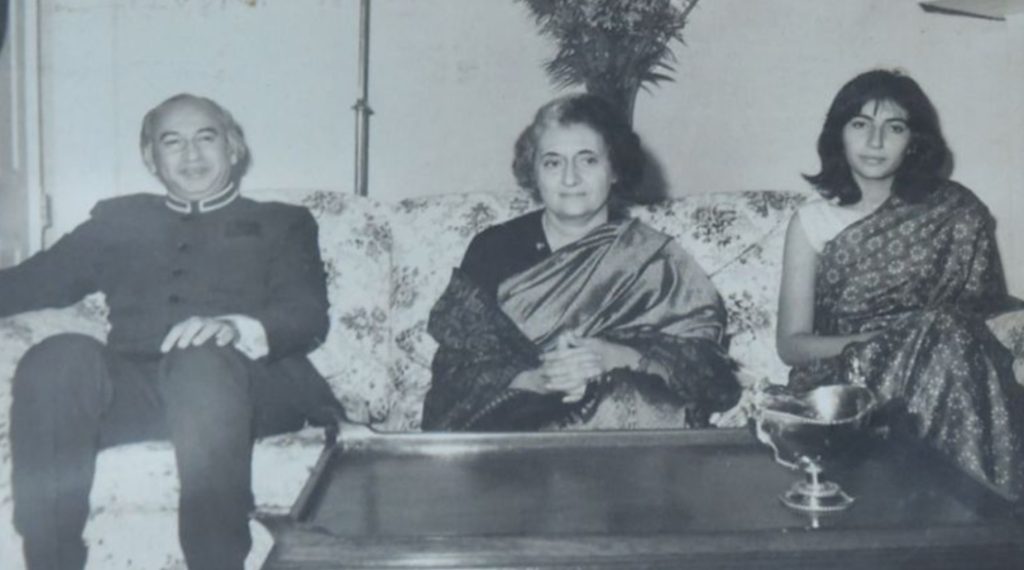
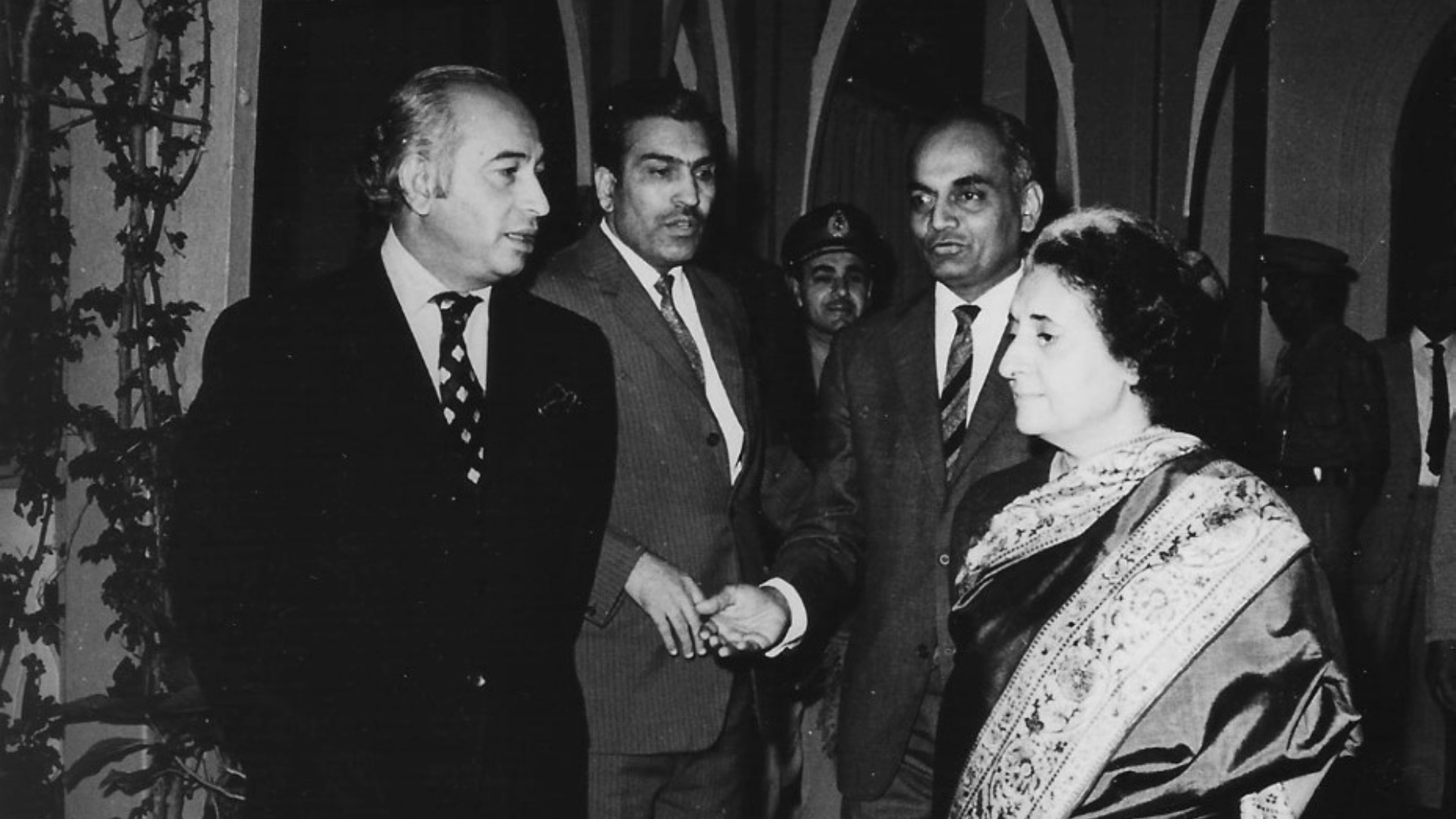
The Bhuttos, father and daughter, with Indira Gandhi in Simla, 1972
The Simla Agreement was signed by prime ministers Indira Gandhi of India and Zulfikar Ali Bhutto of Pakistan. Bhutto had brought his daughter Benazir to the summit to acclimatize her to matters of state. Just as, decades earlier, India’s prime minister Jawaharlal Nehru had taken Indira on his travels, to groom her to inherit his mantle. All three dramatis personae of the accord later lost their lives to the political violence which became a characteristic of South Asia. Bhutto, who served as president and then prime minister, was hanged in 1979. It was a judicial murder organized by his successor General Zia-ul-Haq, after a military coup. His daughter, who was also elected prime minister, was assassinated on the campaign trail in 2007. In 1984, Indira Gandhi was shot dead by her Sikh securitymen after she ordered a military assault on the Golden Temple in Amritsar, the holy of holies of their faith, in an effort to contain the Khalistan movement ― which she herself had amplified for political capital. The Sikh agitation lives on overseas, and has affected India’s relations with Canada and the US, following assassination attempts, successful and botched, in the two countries.
There is a reason why Indian diplomacy succeeded then and is all at sea now.
The choice of Simla for the talks was sensitive to the shared history of India and Pakistan. The British Raj, which united the subcontinent by force of arms, had made Simla its summer capital in 1864. Barnes Court, where the agreement was signed, became Raj Bhavan, the official residence of the Governor of Himachal Pradesh, after independence and the creation of the state. Earlier, momentous political discussions which paved the way to India’s independence had been held in Simla. The Simla Conference was convened in 1945 to approve the Wavell Plan for Indian Self-Government. Much earlier, in 1906, the Simla Deputation of 35 Indian Muslim leaders was led by Agha Khan III, a founder of the All India Muslim League, to convince the liberal Viceroy Lord Minto and his Secretary of State John Morley to grant Muslims more representation in politics.
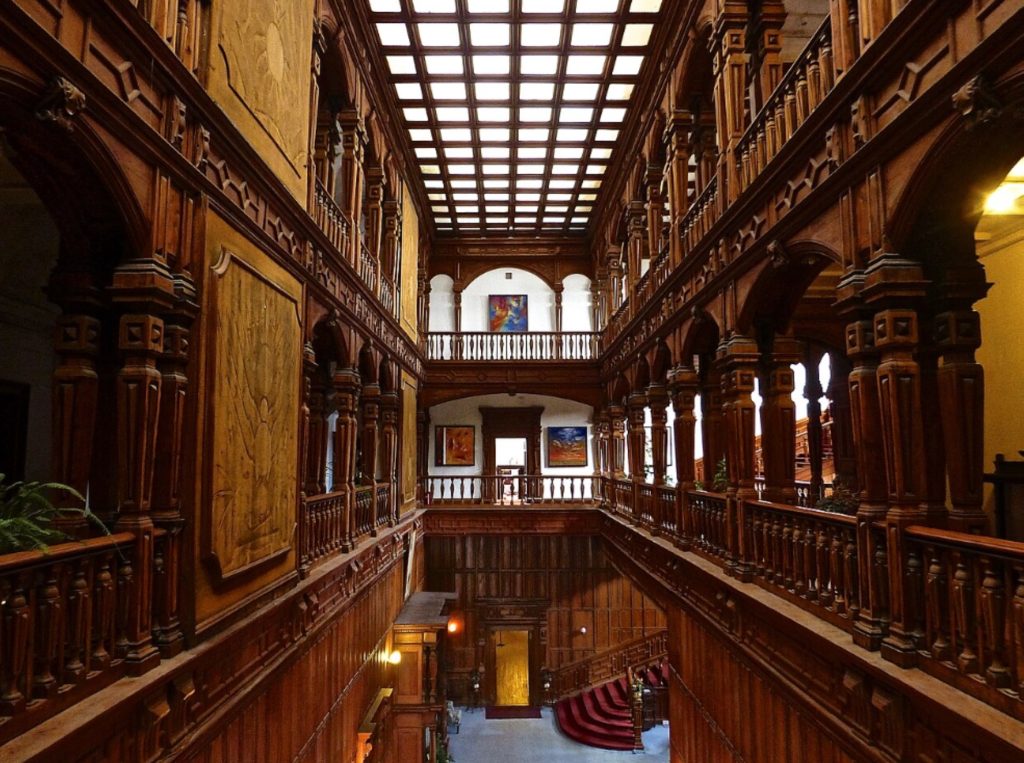
Viceregal Lodge, Simla
These events were held in the Viceregal Lodge, which is now the Indian Institute of Advanced Study, where talented citizens and administrative officials take sabbaticals to improve themselves and the world. From 1863 to1981, the Peterhoff, which is now reincarnated as a hotel, was the summer home of British viceroys and later, of Indian governors. It also housed the Punjab High Court, where Nathuram Godse was brought to trial for the assassination of Mahatma Gandhi.
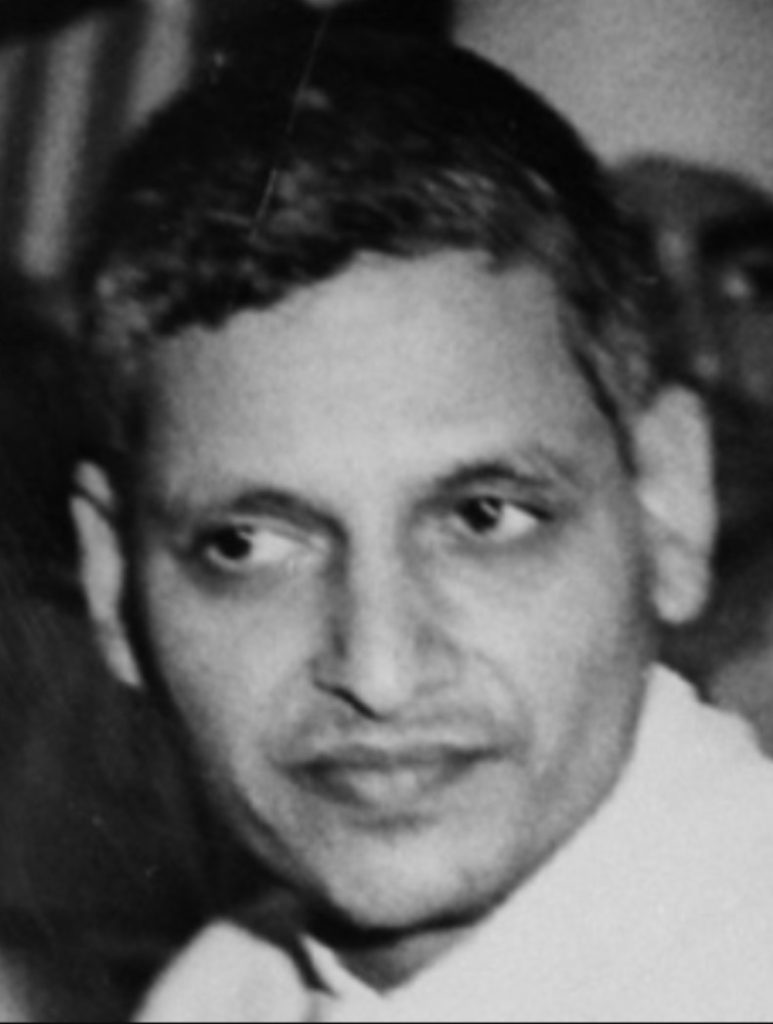
Godse at his trial
The Peterhoff was gutted by fire in 1981, and the governor’s residence was moved to Barnes Court, which was then a state guest house. It was named after Edward Barnes, Governor of Ceylon and commander-in-chief of the East India Company’s army. It had served as the summer residence of legendary colonial commanders-in-chief like Colin Campbell, Hugh Rose and Charles Napier. In Barnes Court, George Anson, the commander-in-chief who perhaps precipitated the Rising of 1857 by his insensitivity to Hindu and Muslim taboos, and then failed to contain the violence, received news that sepoys in Meerut and Delhi had mutinied. From the point of view of the government and administration of India and Pakistan ― and perhaps of Britain, too ― the hill town of Simla is a sacred geography.
Politics and diplomacy were conducted with a degree of politeness which present-day practitioners would mistake for weakness.
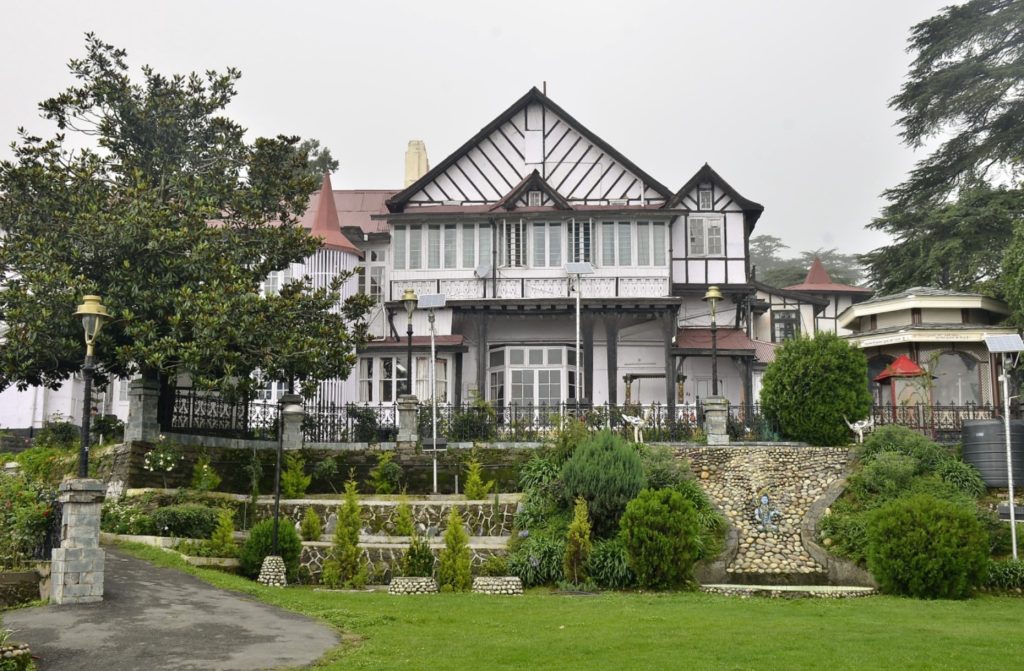
Barnes Court, Simla
The Bhuttos stayed at Barnes Court, and Zulfikar held meetings with his staff on the lawns for fear that the rooms were bugged. Indira Gandhi camped at the Viceregal Lodge, but she took personal care of the hospitality of her guests from Pakistan. In the Cold War era, a public culture of civility mingled with a pervasive air of suspicion. Nevertheless, at the time, politics and diplomacy were conducted with a degree of politeness which present-day practitioners would mistake for weakness. That is why it is interesting to look back on a foundational treaty of South Asia and the atmosphere in which the diplomacy which led to it was conducted. There is a reason why Indian diplomacy succeeded then and is all at sea now.
The Simla summit was held because the Bangladesh Liberation War of 1971, in which India had intervened with decisive effect, disregarding the threats of Nixon and Kissinger, had changed the map of South Asia and the strategic balance of power in the region. A document acknowledging the new ground realities was indispensable. It was agreed that the two nations would end hostilities so that their resources, ravaged by centuries of colonial plunder, could be directed to development. They would repatriate prisoners of war (India held a huge bargaining chip: 93,000 Pakistani POWs) and would settle their differences, including the question of the disputed territory of Kashmir, exclusively by bilateral discussion.
The Simla Agreement is officially dated July 2, 1972, but it was signed after midnight in a hurriedly convened meeting. Four hours before that day ended, Bhutto held a press conference in which he declared that the talks with Mrs Gandhi had failed. TN ‘Tikki’ Kaul, Foreign Secretary and diplomat of such stature that, Mrs Gandhi’s Press Secretary HY Sharada Prasad wrote in a magazine column much later, Indian diplomacy was described as “one-third protocol, one-third alcohol and one-third Tikki Kaul”, drove off down the road to the plains. Some foreign correspondents took the hint and also left for Delhi, though Sharada Prasad cautioned that in summits of this nature, the palaver is never finished until the heads of government leave.
Indeed, close to midnight, journalists covering the summit were summoned back to Barnes Court, and the accord was hurriedly signed in their presence in the wee hours of July 3. What transpired between Bhutto and Indira Gandhi in the intervening hours, and how the document they signed was altered, is not known, but perhaps Mrs Gandhi made concessions to achieve partial success. And when it was signed the Indian Foreign Secretary, who was protocol-bound to witness it, was hurtling through the night, miles away.
The Simla accord would set the baseline of India-Pakistan relations for 53 years, but mileage varied over the decades. It did keep the peace in general, but there were routine departures like the Kargil War of 1999, the Siachen conflict of 1984–2003, the 26/11 terrorist attack on Mumbai, the Balakot ‘surgical strikes’ and the four-day air war of 2025, when the exhausted Simla Agreement finally gave up the ghost.
These were the notable conflicts between the two big military powers in South Asia, discounting the background noise of their relentless rivalry ― routine artillery exchanges on the Line of Control which cause mass evacuations, border crossings by heavily armed terrorists from Pakistan, urban bombings in both countries and alleged financial crimes to support such projects, Pakistan’s complaints of Indian black ops in Baluchistan and the North West Frontier Province, and the eternal tragedy of Kashmir, most recently embodied in the random slaying of tourists in Pahalgam.
What follows is the personal account of Crocker Snow Jr, who covered the Simla summit as foreign correspondent of the Boston Globe. He is among the very few who remember what geopolitics and diplomacy were like, in the US and in South Asia, 50 years ago, and the role of the press in foreign affairs:
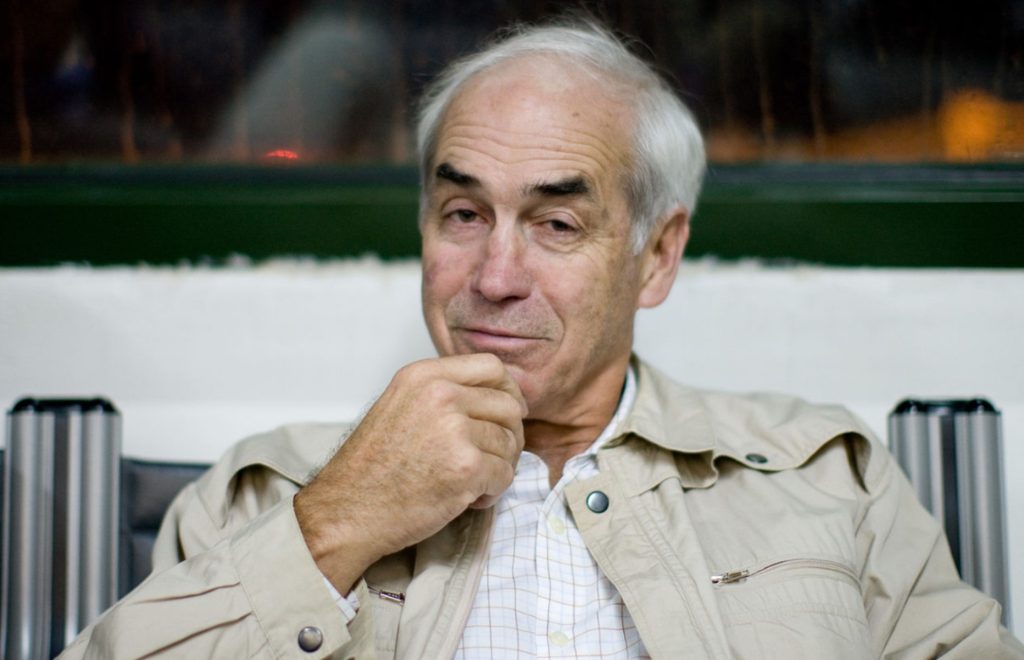
Crocker Snow Jr, 2008
I was one of four or five Western reporters covering a six-day summit meeting in 1972 at Simla in India, in the foothills of the Himalayas, not far from Kashmir. It was very different from any top-level summit today, without intrusive media and worries about AI-generated false information on social media. And it accomplished something, too. Pakistan recognized Bangladesh ― and thereby accepted that East Pakistan no longer existed. And it set the terms by which an agreement over the disputed status of Kashmir could be reached.
My strongest memory of the 1972 Summit Meeting between India’s Indira Gandhi and Pakistan’s Zulfikar Ali Bhutto (apart from the lingering, sweet scent of coriander in the air in the banquet rooms!) was of the totally different ways in which the two heads of government tried to use the Western media present.
I was one of a few Western correspondents competing for the latest scoop. I knew my colleagues from the Washington Post and the New York Times, and the wire services Associated Press and Reuters. And for just a day, the Chicago Tribune was there, too.
South Asia may present a bigger nuclear threat because the sparring neighbours can no longer invoke the ‘spirit of the Simla Agreement’.
Bhutto was charismatic, confident and comfortable with the media, open to navigating one or even two press conferences every day. I don’t recall that he had staff advising him. He was only accompanied by his daughter Benazir Bhutto (who matriculated at Harvard). Indira Gandhi, the other player in this game of chess, was much more reserved, comparatively silent, wrapped in her saris and an aura that suggested that she knew more than she was telling.
Bhutto won the war of words and the attention of the press, capturing key headlines and clearly leading by lengths in the first rounds of the talks. Mrs Gandhi was a little behind in this skirmish, fought amidst the phalanxes of Indian curries which dominated the summit. She got fewer headlines and maybe just a couple of quotable quotes. She seemed to be less determined than her adversary. This was the state of play over the first three or four days. It was like a boxing match which would be decided on points. The picture began to change when Mrs Gandhi’s seasoned media advisor HY Sharada Prasad (also a celebrated newspaper editor, columnist and author) approached me, offering a private one-on-one interview with her the next day. An exclusive? Yes, yes, of course!
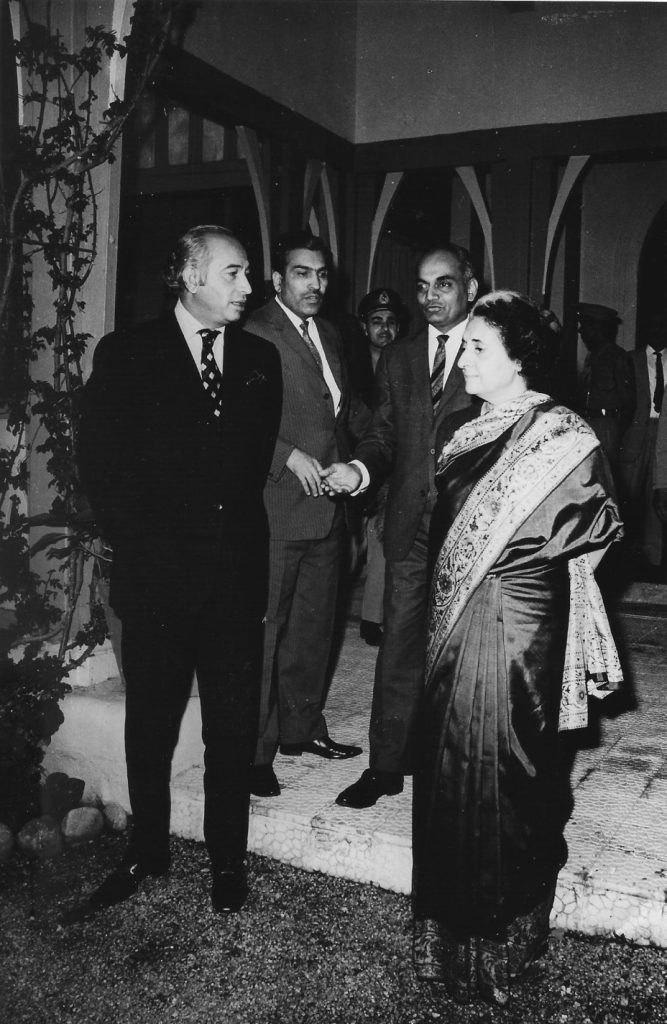
Zulfikar Ali Bhutto, Indira Gandhi and (right rear) HY Sharada Prasad, Simla, 1972
We met in a private living room. She was demure and reserved with a small smile, distinctly alluring in a very feminine way. She made her points clearly, seeded and planted carefully, and her views were carried prominently in the Boston Globe, marked ‘exclusive’.
But a key subtext emerged within 24 hours, when it became clear that my two competitors, the foreign correspondents of the Washington Post and the New York Times, had their own ‘exclusives’, too! Eventually, we learned to share notes but to keep our fresh and newsy tidbits to ourselves, and perhaps to be aware of the strangely feminine power with which Indira Gandhi had managed the interviews.
What do we see, looking back on the atmospherics and outcomes of the Simla Agreement? Some of the core issues are now cut and dried. Others remain hot and have been pulled in different directions, like international affairs themselves.
Bangladesh wasn’t explicitly on the agenda of the talks, but it was palpable, like an undertow or rip tide. The 1971 India-Pakistan war had been triggered when President Nixon and his Secretary of State Henry Kissinger ignored Archer Blood, US consul-general in Dhaka, who cabled Washington alerting it to the genocide being conducted by the Pakistan army in East Pakistan, which would soon become Bangladesh (see Gary J. Bass, The Blood Telegram, Alfred A. Knopf, 2013). Indira Gandhi filled the void, authorizing the Indian army to enter East Pakistan on a humanitarian mission in support of the Bangladesh liberation struggle, while the US, which backed and armed Pakistan, menaced India by stationing the carrier USS Enterprise in the Indian Ocean.
The Simla meet settled the border question in the east ― Pakistan would no longer claim the territory of Bangladesh. But the India-Pakistan border in Kashmir remains unresolved, an unhealed wound. The accord only dictated that neither nation would attempt to alter the Line of Control, which still serves as a de facto border. That remains the current situation, and sadly, even this makes a firmer impression on the map than, say, the borders of Palestine.
Today, in a totally different zeitgeist, the levers of diplomacy do not work in the same way.
Bangladesh carried on regardless, a fragile democracy whose economy relied initially on agriculture and fisheries, especially jute and hilsa fish, a species of herring which is prized in the region. Even now, when Bangladesh has surpassed India on several developmental indices ― and, in May 2026, even on GDP per capita ― how much hilsa it releases for export to India remains a measure of the quality of relations between the two nations.
At Simla, the most divisive point was Kashmir, and it remains so in India-Pakistan relations, making the region a nuclear flashpoint. Pakistan was effectively cut in half in 1971, after which the nation has had its ups and downs. It flirted with Osama Bin Laden, who was killed by US forces on its soil, embarrassingly close to one of its biggest military bases at Abbottabad. But it remains in favour with the US though it has developed deep links with China, especially in military technology, both conventional and nuclear. It relied on US military aid through most of its history, but it held its own in a brief air war with India this year thanks to Chinese fighters, and about 70% of its current weaponry is estimated to be Chinese. A close US ally once more, it is the only credible broker in the war between the US and Iran.
India has surged since it liberalized its economy in 1991 ― the world’s biggest democracy is the fourth-biggest economy, remains fast-growing, and is home to the world’s largest pre-affluent middle class. In foreign affairs, after leading the Non-Aligned Movement during the Cold War, it is now an important member of BRICS. And in response to US tariffs, it made common cause with China and Russia at the Shanghai Cooperation Organization meet.
The Simla Agreement was discussed in an information culture which now seems remote, with no Internet, no existential threat of global climate change and, yes, none of the mysteries of AI ― an obscure field of research at the time, dominated by LISP programmers. Today, in a totally different zeitgeist, the levers of diplomacy do not work in the same way. Maybe the issues are similar, but the methodologies by which they are thrashed out, communicated, broadcast, distributed and discussed in the public domain have changed.
Kashmir was back briefly in the headlines in June 2025, after a terrorist attack at a tourist spot in Pahalgam triggered military conflict between India and Pakistan. Bad blood remains, and it turned the cricket pitch, which was always a space for diplomacy, into a proxy battlefield. The tragedy in Pahalgam, Kashmir, was dwarfed by the drawn-out violence in Gaza, Ukraine and Iran, but Kashmir is still the main reason why South Asia remains a possible nuclear flashpoint. Bhutto and Mrs Gandhi, who negotiated in Simla, were also the political originators of the nuclear weapons programs of Pakistan and India. And today, South Asia may present a bigger nuclear threat because the sparring neighbours can no longer invoke the ‘spirit of the Simla Agreement’.
Are You Passionate About India's Future? Join Our Community to Collaborate, Advocate, and Create Positive Change.