
The aggressive nationalism of the 19th century cast the nation in the image of the mother. Today, however, the “woman’s question”, if not entirely effaced, has been pushed to the margins — silenced and absorbed into the swelling authority of a reconstituted, paternal nation. The nation now speaks in the name of the father: it is invoked, celebrated, and mourned in the name of the father — and, in the name of the father, or the Daddy, it demands vengeance.
The nation now speaks in the name of the father: it is invoked, celebrated, and mourned in the name of the father — and, in the name of the father, or the Daddy, it demands vengeance.
The contemporary history of Bollywood provokes such a condensation of the paternal figure into the ever-looming presence of the Big Daddy, charged with a heightened nationalistic libido, here to protect and preserve the people of the nation. Bollywood celebrities, loved and revered by these same people, appear at multiple events across the year — from the inauguration of Ram Mandirs to events organized by the Rashtriya Swayamsevak Sangh (RSS) — expressing their full devotion to the Big Daddies, clad in their Manish Malhotra outfits and Chopard sunglasses. Silent about any political or social issue that might even slightly irk Big Daddy, they ensure that the film screen — their ultimate space of redemption — is transformed into a hypermasculine, 56-inch Daddyscape.
Yet the screen must stretch further to accommodate the epic scale of the narrative — so vast and prolonged that spectators find no release from its hyperreal grandeur. Even after leaving the theatre, they are compelled to return, drawn back to witness, as swahriday spectators, the unfolding saga of sacrifice and revenge enacted by the phallic authority and agents of the nation. Recent films persistently attempt to reconstruct a history they claim was tarnished by time and by liberal critique. The conservative strategy is to comb through fabricated ‘files’ and reconstruct a version of history that aligns with a singular, jingoistic notion of patriotism. Whether Article 370, The Vaccine War, Veer Savarkar, Kashmir Files or Bengal Files, each resonates with an audience unconsciously steeped in Islamophobia and predisposed to uncritical celebration of the ruling party, its government and its policies. Male figures dominate these narratives, tasked with rescuing the nation from enemies coded as outsiders to the majoritarian religious identity. They often echo multiple iterations of the Ram archetype, embodying unwavering surrender to public duty while eclipsing all private emotions and personal conflicts in the process. Incidentally, Ramayana, whose teaser has already stoked excitement with Ranbir Kapoor as Lord Ram, claims that the film is “Our Truth, Our History.” But whose “our” does this claim represent? Whose history does this cinematic idiom insist on narrativizing and projecting?
Dhurandhar’s success, as a film garbing itself as historical truth while adhering to the same logic of emotional dearth, is worth noting. Within months of Dhurandhar’s release, its sequel — an extension of the first part — hit the box office to roaring success, becoming one of India’s highest-grossing films of all time. It has been credited with ushering in a “seismic” shift in the North American theatrical market, with chains like Regal and AMC running multiple showtimes to consistently full houses. Each part runs approximately four hours, mimicking the expansive length of an epic, yet Dhurandhar resists conventional genre classification. It is neither merely an action film nor a spy thriller; it simultaneously masquerades as a quasi-documentary, borrowing found footage, archival clippings, and voiceovers to render itself as historically grounded as possible within its limited fictional and cinematic scope, claiming inspiration from “incredible true events.”
The films mentioned above, driven by a proto-nationalist agenda and designed to provoke a sensationalist nationalism, now constitute an emergent genre within Bollywood — one that exceeds the bounds of the filmic text to shape electoral imaginaries as well as circuits of international sponsorship and endorsement. My own experience at an AMC theater in New Jersey was at once spectacular and unsettling. Beyond the occasional cheers at the appearance of Ranveer Singh or Sanjay Dutt, what stood out was the audience’s unwavering, almost devotional attention. This was not an audience of cinema in general, but one oriented toward a nationalist surrender — viewers who gravitate towards particular films that affirm pre-existing agendas, using them to rehearse a sense of belonging. In watching, they momentarily reclaim a diasporic nostalgia and nationalistic fervor for a homeland whose citizenship they may no longer formally inhabit, but can affectively re-enter through the propaganda such films mobilize. This affective re-entry is mediated through a carefully constructed archive of events, whose selection and narration perhaps warrants closer scrutiny.
From its very inception, the audience is interpellated — not just into the narrative, but into its ideological command: to avenge the death of “your people” as your ultimate dharma.
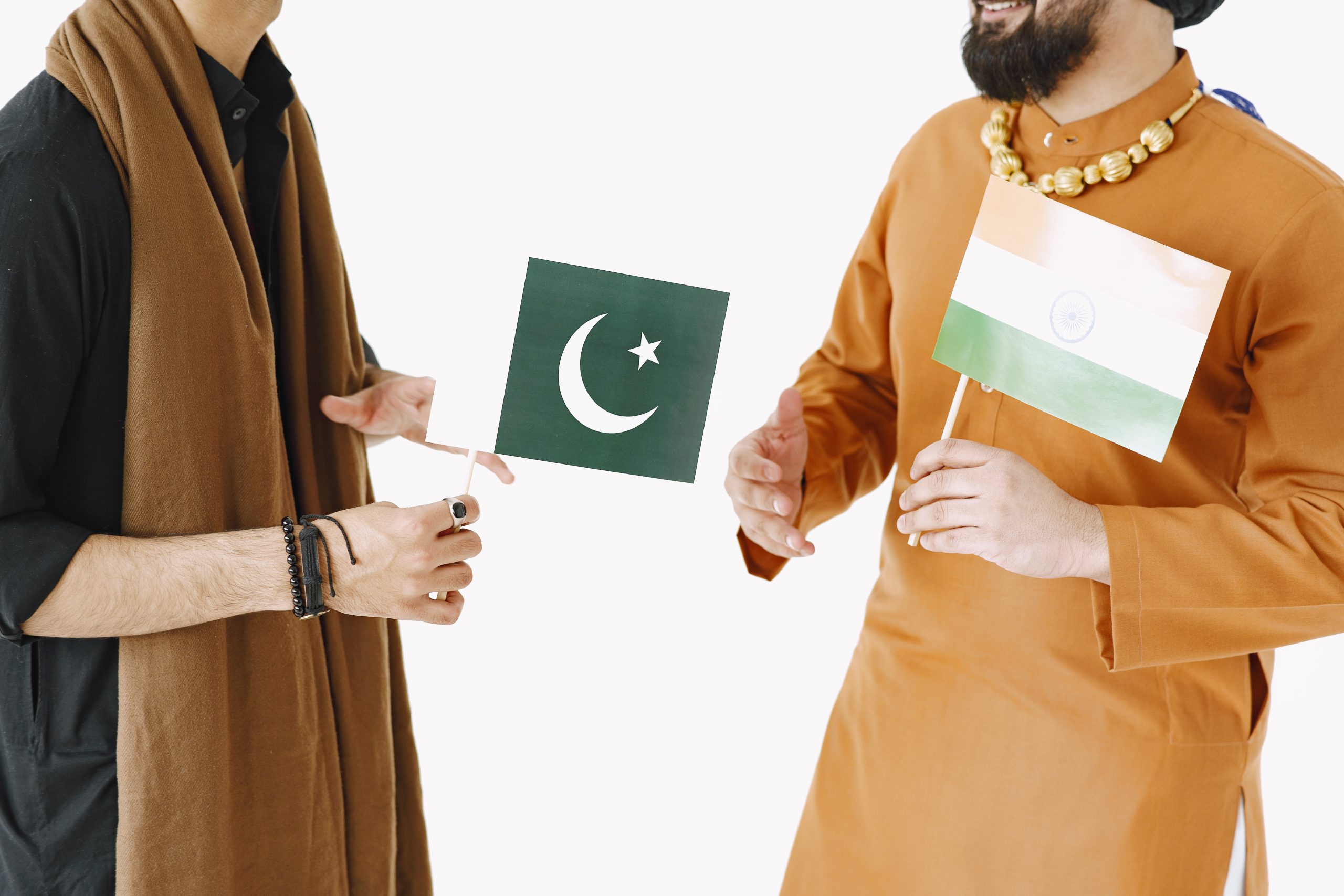
But which events does Dhurandhar care to depict, and how are they narrated? The film references the 1999 hijacking of Indian Airlines flight 814 to Kandahar, the 2001 attack on Parliament, the 26/11 Mumbai attacks, and even demonetization. Dhurandhar is not interested in the mundane; it is a chronicle of the powerful — Big Daddies in India and Pakistan — armed with the means and muscles to shape narratives to their convenience. While personal anxieties occasionally drive the plot forward, they are ultimately subordinated to acts of accomplishment and perceived nation-building, serving the overarching interest of the state. Dhurandhar constructs an archive deliberately cut off from the everyday realities of ordinary Indians. The suffering caused by demonetization — the deaths, the chaos, the ruined livelihoods, the sheer waste — is absent, appearing only to justify the government’s “timely and righteous” action.
‘Daddies’, or the repressive state apparatus in Althusserian terms, see all, while ordinary people remain unaware of the complexities of all that takes place. The film’s fictionalized archive works precisely because the masses are pliable, their consciousness hypnotized, drawn away from lived experience into a meticulously staged fantasy where every disaster is orchestrated and every act of power framed as inevitable. In Dhurandhar, reality is less a lived world than a performance of authority, designed to convince its audience that even suffering serves a purpose.
YouTube phenomenon Dhruv Rathee has called Dhurandhar an advertisement trying to sell a “khokla (hollow) product”. The box office response tells us how well it is selling. Its khokla-ness is further exposed through an irrational, hyper-visual spectacle of violence — scenes that add nothing to the plot but reinforce its propagandist thrust. Violence in film is not inherently a problem, but its deployment in a film like Dhurandhar becomes deeply problematic. The film opens with the slitting of an innocent man’s throat by the enemy, the former’s blood spewing toward the spectator. A phallic thrust of the enemy’s gun erupts to strangle the people’s voice, silencing even the utterance of their nationalist slogan — Bharat Mata ki… This is followed by clips from the 2001 Parliament attack, where a woman police officer — one of the film’s few, fleeting female presences — is shot while her gaze meets the camera, almost interlocking with that of the viewer.
Gun violence itself is almost muted against the repeated spectacles of head-smashing, death by boiling, and other peculiar and archaic forms of torture. This haptic excess sutures the spectator into the film’s agenda, allowing no release. Such suturing draws on the audience’s own repressed unconscious, where a partisan sense of justice finds expression through the film. It becomes their story, their revenge. Little wonder, then, that theatres continue to teem with people — the visceral charge of the film (even amid clumsy editing) striking a chord with a collective, repressed Thanatos, a latent desire to inflict violence (read: revenge) now given cinematic form.
Dhurandhar reopens the space of public spectacle and punishment, staging violence both as a warning of ultimate authority — of the ‘daddies’ — and as a means of generating affective intensity that works to suspend, even override, critical consciousness. In this sense, the film’s persistent emphasis on hyperbolic violence and a hardened, muscular masculinity works directly in the service of propaganda. Himanta Biswa Sarma, the BJP chief minister of Assam, has recently said: “If the film is running houseful, victory (for BJP) is certain!” As Sheryl Tuttle Ross suggests, propaganda involves the dissemination of a charged message, whether epistemically sound or not, designed to persuade a socially significant group on behalf of a political cause or institution. Here, violence and masculinity become the very vehicles of that charged message, mobilizing affect rather than reason to secure identification and consent. The result is a foreclosure of ideological critique, where mediation collapses entirely and the spectator is not only subjected but actively produced as a subject, absorbed into the grandeur of an enforced, manipulative, and deeply non-egalitarian narrative. If we inherit interpretive traditions from culture, they are nonetheless interrupted, reconfigured, and strained by time. The excess of the Dhurandhar-verse, and all films that belong to the same idiom, introduce a new hermeneutic law where the play of hermeneutics is itself anesthetized for a while.
Althusser introduced the idea of interpellation to show how state apparatuses ‘hail’ an individual (“Hey you!”) and, even before full awareness, turn them into a ‘subject’ of that call. In Dhurandhar, from its very inception, the audience is interpellated — not just into the narrative, but into its ideological command: to avenge the death of “your people” as your ultimate dharma. The deployment and interpretation of dharma by the masculinist state hails the spectator and sutures them into the Hindutva propaganda or the ideological machinery of the film. The film positions this call as something already given, something you are born into — much like inheriting Daddy’s surname, an identity assigned before choice or reflection. In this way, the spectator is made to feel that this duty is natural, inevitable, and already theirs. A glaring dharma quote from the Bhagavad Gita opens the film: “If you fall upholding Dharma, you will attain heaven. If you are victorious, the world is yours. So rise, Arjuna, and prepare yourself for battle.” Ranveer Singh’s Hamza Ali Mazari, aka Jaskirat Singh Rangi, is driven by this force of dharma, albeit devoid of any internal conflict, seeking vengeance for his family within the violent-by-default world of Karachi — a space depicted as inherently chaotic, its violence spilling into neighboring India. Close-ups of Hamza’s cloudy eyes and sculpted physique convey a cultivated masculinity and charged affect — one through which dharma is enacted.
Bollywood’s new masculinity is ideologically fractured, yet it doubles as a masterclass in cinematic propaganda — sometimes charming, oftentimes pejorative.
In this sense, director Aditya Dhar aligns with the cinematic grammar associated with Sandeep Reddy Vanga (of Kabir Singh and Animal), reworking the figure of the “angry young man” from 1970s and ’80s Bollywood — a figure once rooted in dense psychological and historical contradictions. Here, while the nostalgia is invoked, the figure itself is hollowed out and reconstituted through an excess of testosterone that substitutes affective intensity for depth. Despite a compelling performance, the angry young man of Dhurandhar remains severed from ordinary lived realities, driven instead by an overdetermined urge to activate his dharma in the service of a larger, abstract cause — one anchored in a constructed vision of a Dhar-Bahl nation, or in the compulsions of his own hypermasculine self-image. Within this Daddyverse, the Gandhian ideal of masculinity — vulnerable and androgynous — finds no place. (Recall how the serene image of Hanuman was transformed and mythified into an angry, muscular, vengeful Hanuman seen on the rear windscreens of Ubers across India?) In a recent Reddit thread, Bollywood actor Imran Khan has expressed his disdain for these “hairy angry men covered in blood” lacking in emotional vulnerability. Estranged from criticality and internal conflict, this world revives a colonial logic of hypermasculinity, one that legitimizes vengeance against a geographically intimate enemy, with whom so much is still shared, the border only being the most visible of these entanglements.
In 2023, audiences met another kind of daddy on screen. The ultimate industry icon — Shah Rukh Khan — returned to the silver screen with silver-gray hair and a monologue that asked viewers, by breaking the fourth wall, to be guided not by biceps, but by memory. As the baap who descended to protect his beta, SRK, in Jawan (directed by Atlee, dialogues by Sumit Arora), delivered a Brechtian aside that prompted the audience to think critically, to wield their index finger wisely, and not be swayed by propaganda, fear, or threat. Bollywood’s new masculinity is ideologically fractured, yet it doubles as a masterclass in cinematic propaganda — sometimes charming, oftentimes pejorative. Will a polarized nation be swayed by the wise Daddy advocating for democratic rights and responsibilities, or be swept further into the whirlpool of hate by the bigoted Daddy inciting prejudiced rage?
Are You Passionate About India's Future? Join Our Community to Collaborate, Advocate, and Create Positive Change.