
Image credits: Pelph Hoters, CC0, via Wikimedia Commons
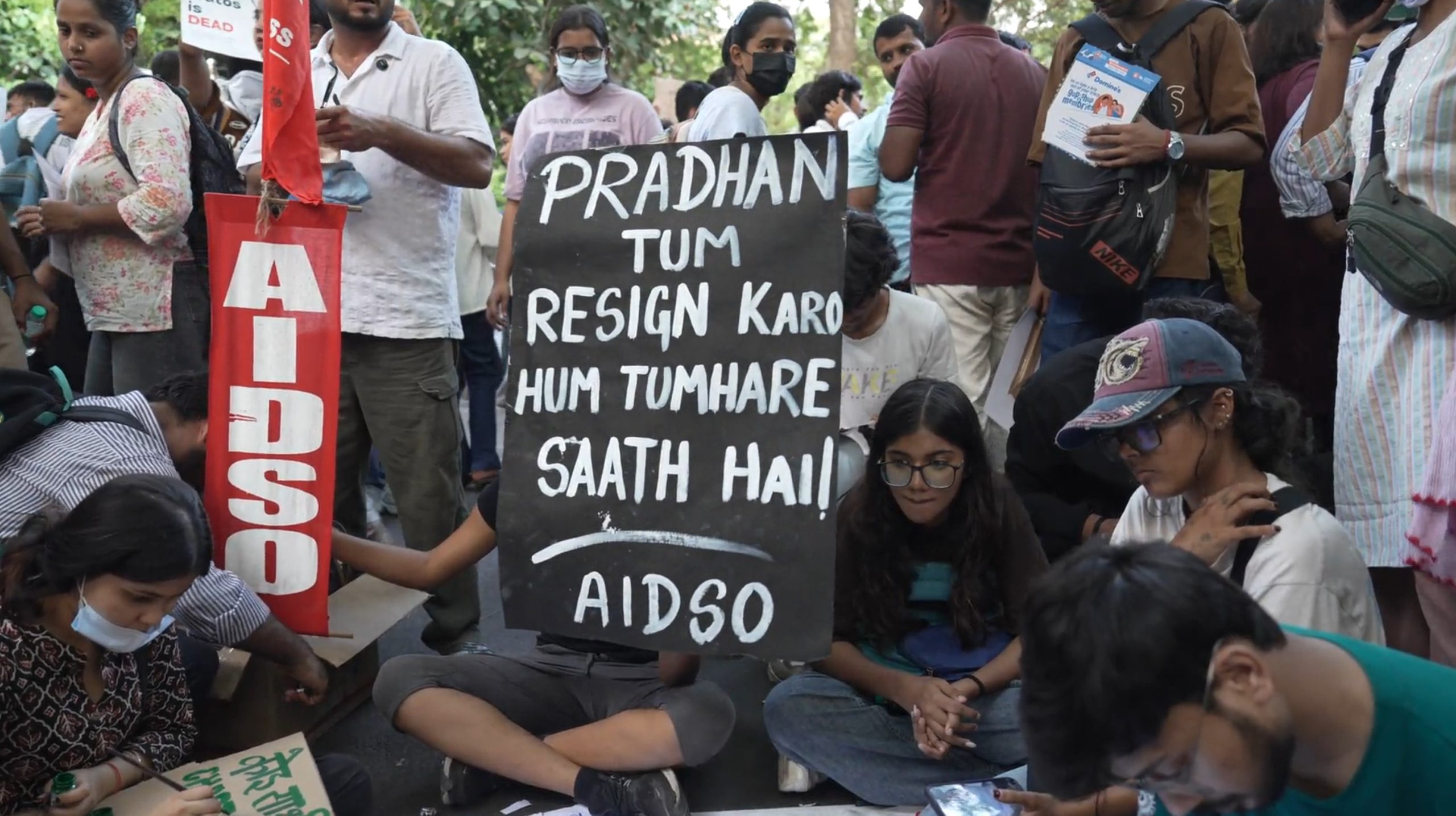
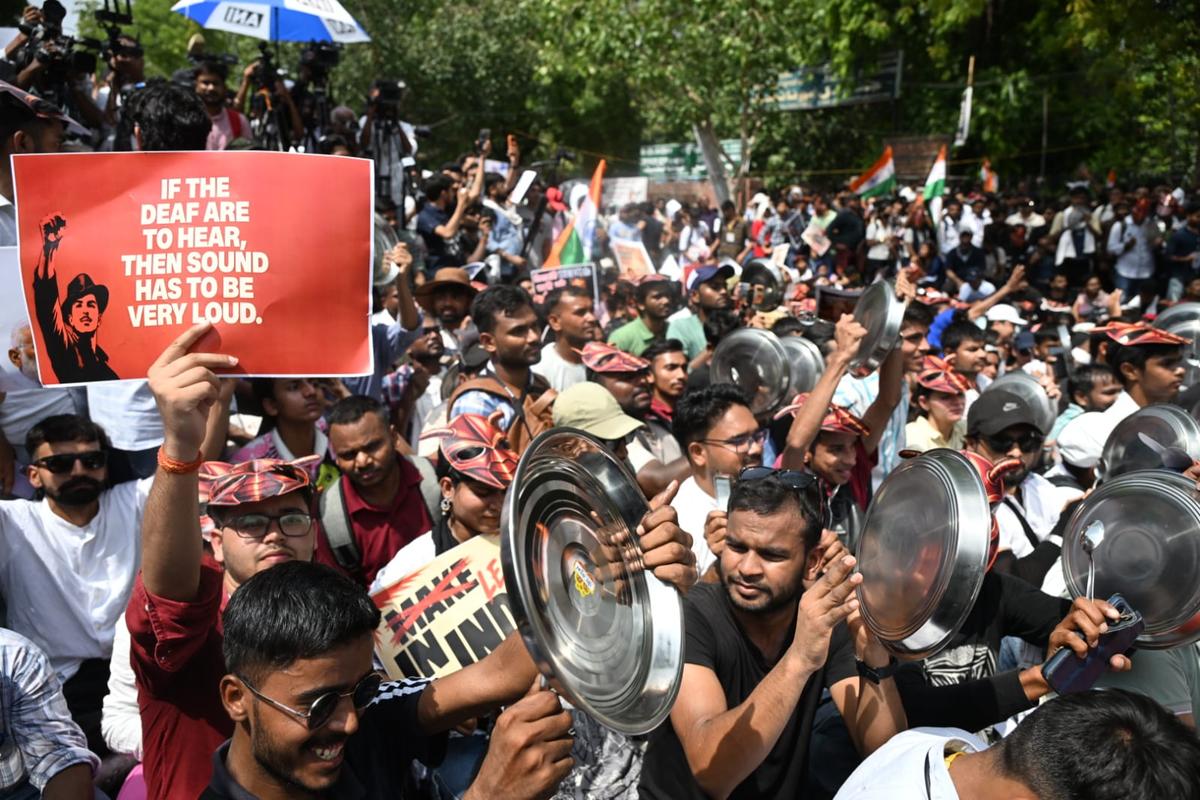
Peaceful protesters including schoolchildren and the elderly baton-charged by paramilitaries, women students slapped around by police officers, young people in hospital with serious head injuries ― the brutality which the Union government has unleashed on the protest at Jantar Mantar led by the Cockroach Janta Party (CJP) movement has no precedent in independent India.
The brutality which the Union government has unleashed on the protest at Jantar Mantar has no precedent in independent India
This shocking demonstration of state violence could mark a turning point for Indian democracy, which is at its lowest ebb under its most insensitive government ever. At home, state violence has failed to demoralize the protesters, who are back at the venue. The air of fearful self-censorship, the leitmotif of the present regime, has been dispelled by ordinary people. And abroad, the images coming out of India are confirming the fears about democratic backsliding raised over the last 10 years by watchdog organizations and US legislators. They have been ignored or pooh-poohed by the Modi government, and by sections of the diaspora which prefer the fairytales which are spun around the foreign visits of India’s jet-setting PM.
American democracy watchdog Freedom House downgraded India from ‘Free’ to ‘Partly Free’ in its 2021 Freedom in the World report and has kept it there due to rising violence and discrimination, intimidation of the press and judicial interference since 2014. Also in 2021, the Swedish Varieties of Democracy (V‑Dem) Institute termed India an “electoral autocracy”, and, later, “one of the worst autocratisers”, whose democratic markers have been steadily deteriorating.
The air of fearful self-censorship, the leitmotif of the present regime, has been dispelled by ordinary people
The US Commission on International Religious Freedom (USCIRF) seeks to designate India a Country of Particular Concern for “systematic, ongoing and egregious” rights violations ― lynchings, the demolition of minority homes and places of worship, citizenship laws and processes which discriminate against minorities, and statutes against conversion and cow‑slaughter. The State Department’s annual Country Reports on Human Rights Practices and International Religious Freedom speak of shrinking space for political dissent, free speech and the press, rising religious intolerance toward minorities, and violence committed by both private and state actors.
In June 2023, Representative Pramila Jayapal and Senator Chris Van Hollen had authored a bicameral letter signed by over 70 members of Congress urging President Biden to raise concerns about human rights and democracy in India with PM Modi. It mentioned the fact that India leads the world in internet shutdowns ― indeed, to prevent CJP protesters from sharing images of state atrocities in real time, mobile internet was jammed in central Delhi during the march to Parliament. Quoting independent reports by the State Department, Reporters Without Borders and Access Now, the letter stated that India’s democratic deficit endangers the very basis of the US-India relationship ― the shared values of the world’s biggest democracies.
This moment offers members of the diaspora an opportunity to reconsider what they want to believe — the visible, self-evident truth, or pleasant fictions about a distant land that exists only in memory
The UN High Commissioner for Human Rights and other UN experts have criticized India’s handling of protests and reporting about them. They said that using excessive force against protesters and threatening journalists and activists with sedition charges violate human rights. Globally, concerns have been raised about the lengthy incarceration of activists without trial, especially those involved in the Bhima Koregaon event and the protests in Delhi against the Citizenship (Amendment) Act. India’s most prominent political prisoner is Umar Khalid, who was picked up on the strength of nebulous suspicions connected with the violence in Delhi and remains behind bars six years after. All these warnings have been rubbished by the Indian government as biased, ignorant and methodologically flawed. Sections of the diaspora have been happy to be blind to the less palatable truths about present-day India and hold on to their reliably pleasant experiences during PM Modi’s visits ― the personal touch, some heart-warming anecdotes, the ego-massage of proximity to power, a little song and dance. So much nicer than the picture of a brutal autocracy which has now emerged from the streets of Delhi and is propagating across the internet and the world’s media. This moment offers members of the diaspora an opportunity to reconsider what they want to believe ― the visible, self-evident truth, or pleasant fictions about a distant land that exists only in memory.
Are You Passionate About India's Future? Join Our Community to Collaborate, Advocate, and Create Positive Change.